Electric Fish Advertise Their Bodies

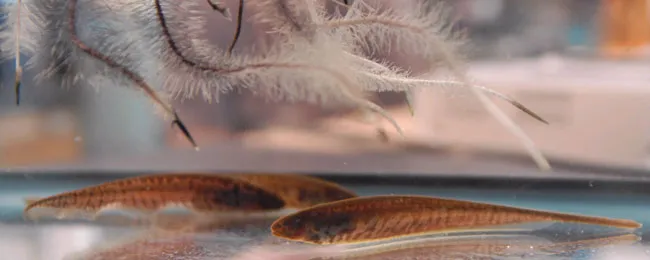
Male fish can amp up their electric fields to woo females and intimidate rivals, research now reveals.
A number of fish can generate electric fields. Relatively few such electric fish pack strong enough jolts to defend themselves or stun prey — most just use their electrical discharges to help navigate the water or communicate in the dark.
One weakly electric fish is the nocturnal gymnotiform fish (Brachyhypopomus pinnicaudatus), a toothless fish native to the Amazon basin. At night, males of the species give off big, long electric hums, almost like serenades.
Still, flamboyant displays typically have to be challenging to do in order to attract the opposite sex. Their difficulty reveals how fit the performer is, and thus how worthy a mate. Past research suggested that generating such electric displays was trivial for the fish, and thus seemingly not very sexy.
To see just how much energy these electric fish pumped into their signals, behavioral ecologist Vielka Salazar at Florida International University in Miami and her colleagues measured how much oxygen they consumed during electric discharges.
Salazar discovered the male fish invested as much as 11 to 22 percent of their body's energy in their nocturnal electric displays. Females hardly exerted themselves electrically, just expending 3 percent of their energy.
"If these displays are expensive to generate, one can presume that individuals paying attention to these signals can infer a better quality male is generating them," Salazar told LiveScience.
Get the world’s most fascinating discoveries delivered straight to your inbox.
When Salazar looked at how fit the males were, she found the fattest and healthiest males often broadcast the biggest electric signals. As such, they were essentially advertising their bodies.
The researchers now seek to determine if these electric signals are meant to attract females, warn away other males, or both.
Salazar and her advisor Philip Stoddard detailed their findings online Feb. 29 in the Journal of Experimental Biology.
- Amazing Animal Abilities
- Image Gallery: Freaky Fish
- Electric Fish on Verge of Evolutionary Split