













Despite Legal Challenge, Tyrannosaur Sells for $1 million

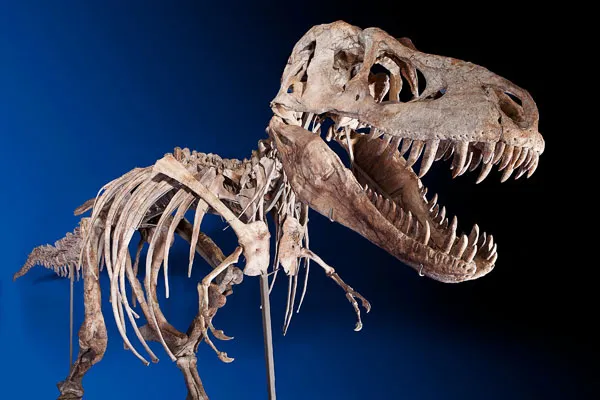
NEW YORK — A nearly complete tyrannosaur skeleton has sold for just over $1 million, in spite of a call to halt its auction because the fossils may have been taken illegally from Mongolia.
During an auction this afternoon (May 20), Heritage Auctions sold the Tyrannosaurus bataar specimen to an anonymous bidder on the condition that the sale receive court approval.
Opponents did not want the sale to go forward under any condition. A temporary restraining order filed in the name of the Mongolian president Elbegdorj Tsakhia sought to prevent the sale of the skeleton. The court documents contend that the specimen originated in Mongolia, and that the export of fossils excavated in Mongolia is a criminal offense under the country's law.
Under the terms of the sale, the specimen will not be delivered to the buyer until the sale receives court approval, according to Gregory Rohan, president of Heritage Auctions. [Up For Auction: A Natural History Gallery]
Attorney Robert Painter, who represents the Mongolian president, attempted to stop the sale when the tyrannosaur's turn came toward the end of today's natural history auction. Painter said he would continue pursuing the case and attempt to hold Heritage Auctions in contempt of court for going forward in spite of the temporary restraining order.
During the auction, a handful of Mongolians protested from the sidewalk nearby, holding photos of the specimen and a banner reading "It's a national treasure of Mongolia return our stolen treasure."
"We want this dinosaur to go back to Mongolia where it belongs, that is the sole purpose of this," said Bolorsetseg Minjin, a Mongolian paleontologist and director of the Institute for the Study of Mongolian Dinosaurs, who was among those on the sidewalk.
Get the world’s most fascinating discoveries delivered straight to your inbox.
In response to concerns about the provenance of specimen, a species that is an Asian relative to the North American Tyrannosaurus rex, Heritage Auctions released a statement on Friday saying the specimen entered the United States legally, and that "the consignors warranted in writing to Heritage that they hold clear title to the fossils."
Heritage Auctions has not identified the seller or the buyer, citing a need to protect confidentiality.
"Somebody doesn't put something like this in a major auction that is broadcast and promoted worldwide if they have got something to hide. If there is a title problem, you go and sell it secretly to someone in a backroom for a suit case full of cash," Rohan said. "That is something we have nothing to do with."
Paleontologist Mark Norell from the American Museum of Natural History has supported the Mongolian case, saying that looting of fossils is an increasing problem for the country.
The 8-feet (2.4-meters) tall and 24-feet (7.3-meters) long specimen sold for $1,052,500. It was one of many items up for auction.
You can follow LiveScience senior writer Wynne Parry on Twitter @Wynne_Parry. Follow LiveScience for the latest in science news and discoveries on Twitter @livescience and on Facebook.
