















Album: Animals' Dazzling Headgear

Big bull moose

The antlers of moose are similar to those of deer. This photo was taken in Chugach State Park, Alaska.
Red deer stag
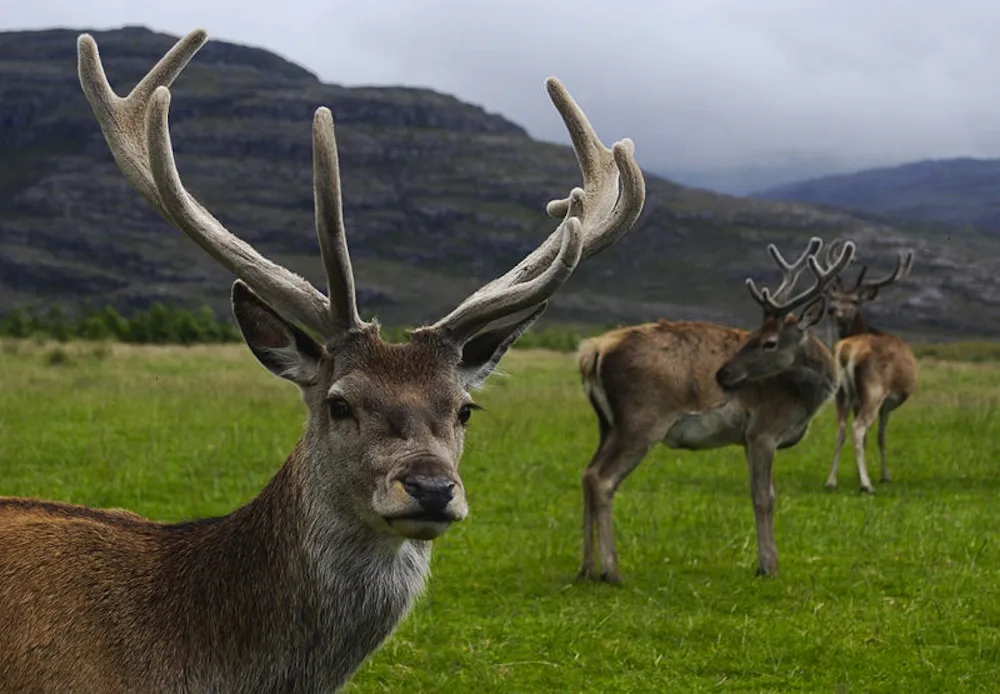
Red deer stag (Cervus elaphus) with velvet antlers in Glen Torridon, Scotland. When the antlers of a deer are still growing they are covered in a special skin called velvet. They lose and re-grow their antlers every year.
Cow in Eyeworth Wood, New Forest

A cow sitting in a sunny spot among the beech trees of the United Kingdom. A cow's headgear are true horns, made of keratin (same proteins as skin and nails) and covered with skin.
Bighorn sheep

Bighorn sheep Ovis canadensis in Glacier National Park, Montana, USA. The sheep's horns are similar to those of cows and goats.
Male elk

Portrait of a male elk (Alces alces), whose antlers are similar to those of deer.
giraffe headgear

The nubs that top the giraffe's head, which are just bone projects covered in skin and hair, are called ossicones.
Pronghorn antelope

This is a male pronghorn antelope, which has very different horns from its normal antelope cousins. The horns have a bone center and a special outer layer that it sheds and re-grows every year.
Get the world’s most fascinating discoveries delivered straight to your inbox.
Okapi

Okapi couple at zoo in Frankfurt am Main. The okapi are a very rare species of ruminant related to Giraffes. They have similar headgear, bone projects covered in skin and hair, called ossicones.
Bubikon cow market

Cow Market in Bubikon, Switzerland. A cow's headgear are true horns, made of keratin (same proteins as skin and nails) and covered with skin.
Mule deer missing antler

A mule deer missing an antler. Deer loose their antlers each year and re-grow new ones from stem cells in the base of the antler.
An aubrac cow

An aubrac cow. A cow's headgear are true horns, made of keratin (same proteins as skin and nails) and covered with skin.

Jennifer Welsh is a Connecticut-based science writer and editor and a regular contributor to Live Science. She also has several years of bench work in cancer research and anti-viral drug discovery under her belt. She has previously written for Science News, VerywellHealth, The Scientist, Discover Magazine, WIRED Science, and Business Insider.