 Live Science Plus






Belize Manatees a Separate Subspecies, DNA Confirms
You are now subscribed
Your newsletter sign-up was successful
Want to add more newsletters?

Delivered Daily
Daily Newsletter
Sign up for the latest discoveries, groundbreaking research and fascinating breakthroughs that impact you and the wider world direct to your inbox.

Once a week
Life's Little Mysteries
Feed your curiosity with an exclusive mystery every week, solved with science and delivered direct to your inbox before it's seen anywhere else.

Once a week
How It Works
Sign up to our free science & technology newsletter for your weekly fix of fascinating articles, quick quizzes, amazing images, and more

Delivered daily
Space.com Newsletter
Breaking space news, the latest updates on rocket launches, skywatching events and more!

Once a month
Watch This Space
Sign up to our monthly entertainment newsletter to keep up with all our coverage of the latest sci-fi and space movies, tv shows, games and books.

Once a week
Night Sky This Week
Discover this week's must-see night sky events, moon phases, and stunning astrophotos. Sign up for our skywatching newsletter and explore the universe with us!
Join the club
Get full access to premium articles, exclusive features and a growing list of member rewards.
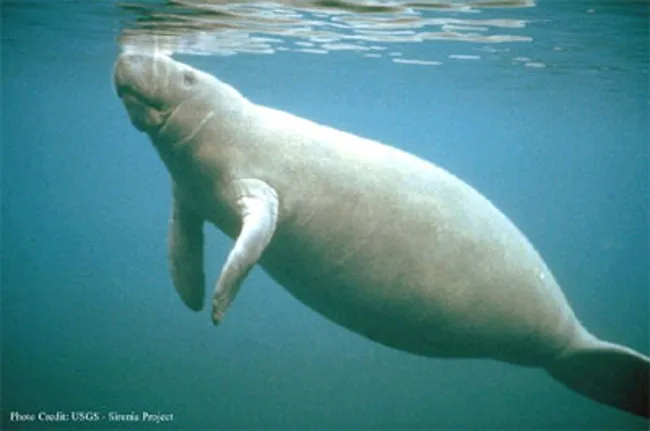
The endangered manatees that live off the coast of Belize are genetically distinct enough to be considered a separate subspecies from Florida manatees, a new study finds.
These Antillean manatees in Belize, however, showed extremely low genetic diversity, raising questions about their long-term genetic viability, the researchers say.
Mixing manatees
Scientists had questioned whether the two seemingly distant Belize and Florida populations were interbreeding in light of radiotracking evidence that manatees are capable of migrating long distances. Florida manatees have turned up in places as far away as Rhode Island, the Bahamas and Cuba.
The researchers analyzed information on nuclear DNA and DNA within mitochondria, the energy-making structures in cells. While mitochondrial DNA is good for understanding historical relationships on an evolutionary time scale, nuclear DNA can provide a modern-day assessment of whether the two populations are migrating and interbreeding, the researchers said.
The genetic evidence suggested Florida manatees (Trichechus manatus latirostris) are not regularly mixing with populations of Antillean manatees (Trichechus manatus manatus) in Belize.
Bottleneck species
Belize's Antillean populations also scored lower in genetic diversity than textbook examples of "bottlenecked" endangered species, such as Wanglang giant pandas, the East African cheetah and an island koala population founded by only three koalas. These species have experienced events that drastically reduced their numbers (called a bottleneck).
Endangered species need genetic diversity to weather threats to their survival, such as diseases, hurricanes or habitat destruction. When a population drops to low numbers, the diversity of its gene pool also shrinks. That means if, say, there's a genetic vulnerability to a disease, most of the manatees would have that susceptibility and could be wiped out if the illness strikes.
Even after a population rebounds to greater numbers, that initial population decline leaves a legacy of reduced genetic diversity.
Manatee corridors
The low genetic diversity in Antillean manatees is attributed, in part, to centuries of hunting that were only curtailed early in the 20th century.
But even with such a small gene pool, notable differences were found between the two manatee subspecies.
"When it comes to the sustainability of a species, this is the type of genetic diversity you want to preserve for the future," said study researcher Margaret Hunter, a conservation geneticist at the U.S. Geological Survey (USGS).
To sustain the diverse gene pool these populations offer, managers will need to consider methods of enabling natural migration and mixing to take place between the two populations, the researchers say.
The research was recently published in the journal Animal Conservation.

