













Vampire bats' 'missing' genes may help them survive on all-blood diet

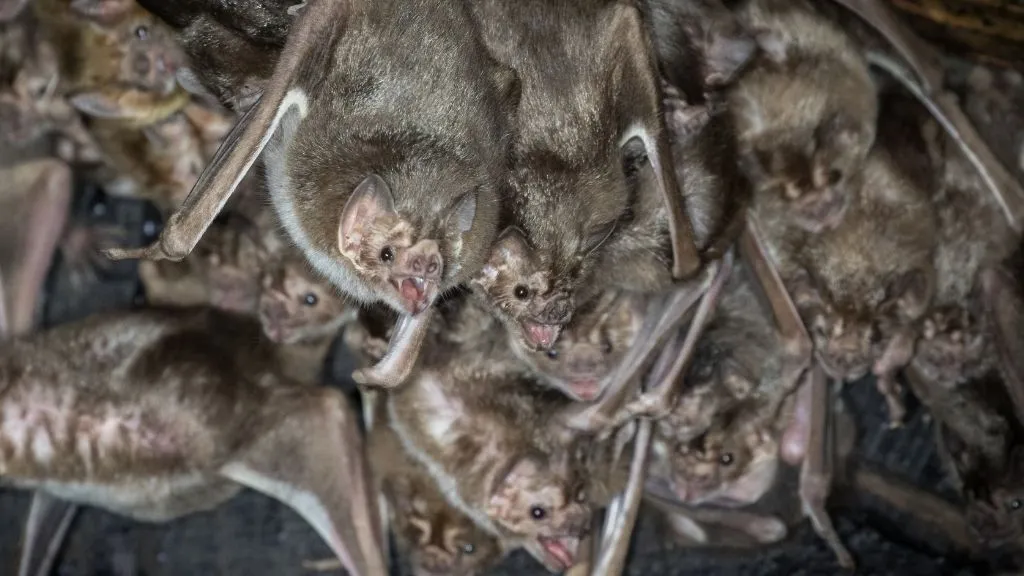
Vampire bats have an unusual, blood-only diet that's high in protein but lacking in other nutrients. Now, a new study hints that "missing" genes may explain how the flying mammals survive on nothing but blood meals, lapped from their victims' open wounds in the dead of night, The Scientist Magazine reported.
In the new study, posted Oct. 19 to the preprint database bioRxiv, researchers compared the genome of the common vampire bat (Desmodus rotundus) with those of 25 other bat species. The analysis revealed that D. rotundus lacks functional copies of 13 genes that appear in the other bats; these missing genes are either completely absent from the vampires' genome, or they contain so many mutations that they likely can't produce functional proteins, study co-author Michael Hiller, a genomicist at the LOEWE Centre for Translational Biodiversity Genomics in Germany, told The Scientist.
And it turns out, vampire bats might benefit from having ditched these 13 genes. Losing the genes may help them extract nutrients from blood in ways other bats can't, according to the study, which has not been peer-reviewed.
Related: Famous fangs: Tales of our favorite vampires
For example, two of the missing genes drive the secretion of insulin from the pancreas, with insulin being a hormone that regulates the amount of sugar in the blood by moving glucose into cells. Past studies have shown that vampire bats secrete little insulin, which makes sense given that the blood they drink contains few carbohydrates, Hiller told The Scientist. This lack of insulin secretion may help the bats conserve what little sugar they consume, by keeping that sugar available in the bloodstream, he said.
The vampire bat genome also lacked a gene called REP15, which is usually activated in the cells of the gastrointestinal tract, the authors noted in their study. Losing this gene would likely increase the amount of iron that can slip into the bats' gastrointestinal cells, by boosting the number of "doors" that iron can pass through on the cell surface. These iron-laden cells would therefore turn over more quickly than in other bats, helping the vampires efficiently rid themselves of all the iron acquired through their diets, and thus avoid metal poisoning, the study authors wrote.
RELATED CONTENT
Another missing gene, CTRL, would usually turn down the activity of trypsin, an enzyme involved in protein digestion and absorption, The Scientist reported. Without CTRL, trypsin activity is likely increased in vampire bats, helping them to break down their protein-heavy blood meals.
Get the world’s most fascinating discoveries delivered straight to your inbox.
Several of the other missing genes appear to be involved in the bats' digestion and metabolism, whereas others are related to the bats' cognitive abilities and vision, the authors noted. And some of the missing genes have unknown effects on the bats' physiology and warrant further study.
Three of the 13 missing genes had actually been uncovered through previous research, published in the journals Molecular Biology and Evolution and Proceedings of the Royal Society B; these genes would usually code for taste receptors that detect sweet and bitter flavors, which are largely absent from vampire bats' diets.
Read more about the missing vampire bat genes in The Scientist Magazine.
Originally published on Live Science.

Nicoletta Lanese is the health channel editor at Live Science and was previously a news editor and staff writer at the site. She is a recipient of the 2026 AHCJ International Health Study Fellowship, with a project focused on antibiotic stewardship practices in Japan and the U.S. They hold a graduate certificate in science communication from UC Santa Cruz and degrees in neuroscience and dance from the University of Florida. Beyond Live Science, Lanese's work has appeared in The Scientist, Science News, the Mercury News, Mongabay and Stanford Medicine Magazine, among other outlets. Based in NYC, she also remains involved in dance and performs in local choreographers' work.