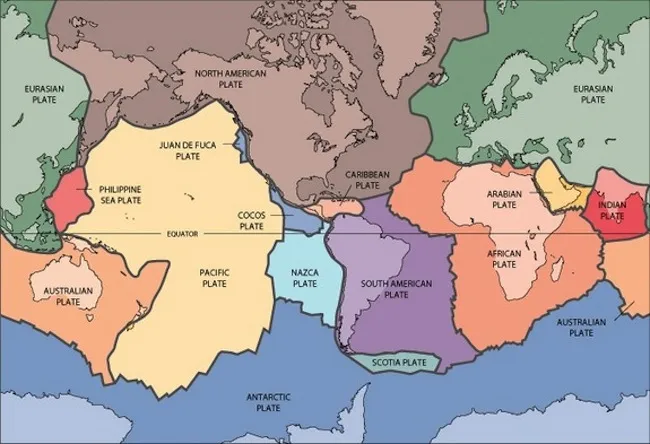
Plate tectonics is relatively new, put forth in the last 30 years or so — its forerunner was the now-discarded continental drift theory. The theory states that Earth's outer shell is made up of huge slabs of rock called plates that glide over the planet's inner layer, or mantle. As these plates shift, they sometimes collide with other plates, making for some interesting, and even deadly, results on Earth's surface, from erupting volcanoes, to earthquakes, to new mountain ranges. Here's a look at Live Science's news and features related to this constantly moving jigsaw puzzle.

-
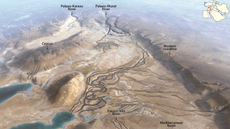 Scientists reveal the origin of the Euphrates — a river that fed the 'cradle of civilization'
The Euphrates River fueled the "cradle of civilization," and a new study reveals the waterway was born of two other ancient rivers around 3.6 million years ago.
4 Commentsgeology -
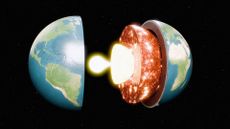 How hot is Earth's core?
Life's Little Mysteries What's the temperature in Earth's core, and how did we figure that out?
Life's Little Mysteries -
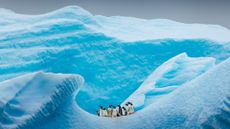 When was the last time Antarctica was ice-free?
Antarctica is covered by a miles-thick ice sheet, but was that always the case? And when was the coldest continent ice-free?
antarctica -
 How long do most planets last?
Planets are born, and they can also "die." So what's the lifespan of a typical planet?
2 Commentsplanets -
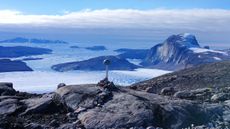 Greenland is twisting, tensing and shrinking due to the 'ghosts' of melted ice sheets
Earth's mantle is so gooey, it takes eons for material that has been displaced by the weight of ice sheets to flow back. And Greenland is very much still processing its glacial past, a new study shows.
3 Commentsgeology -
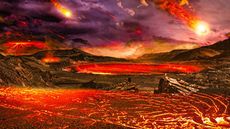 Scientists discover first direct evidence that slivers of 'proto-Earth' may survive today
In a first, researchers have discovered fragments of Earth's precursor that contain distinctive chemical fingerprints in ancient rocks from Greenland, Canada and Hawaii.
geology -
 Plate tectonics may be why Earth has life — and the key to finding life elsewhere in the universe
Feature Emerging evidence suggests that plate tectonics, or the recycling of Earth's crust, may have begun much earlier than previously thought — and may be a big reason that our planet harbors life.
Feature -
 The geology that holds up the Himalayas is not what we thought, scientists discover
A 100-year-old theory explaining how Asia can carry the huge weight of the Himalayas and Tibetan Plateau needs to be rewritten, a new study suggests.
6 Commentsgeology -
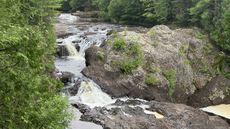 Lake Superior rocks reveal build up to giant collision that formed supercontinent Rodinia
Using paleomagnetic samples collected along the shores of Lake Superior, a new study illuminates the movement of a billion-year-old paleocontinent as it crept south toward a tectonic collision.
geology


