A new type of solar paint could extend the range of electric vehicles (EVs) to thousands of miles.
Revealing the technology on Nov. 24, automaker Mercedes-Benz representatives said its new photovoltaic paint could power an EV for up to 7,456 miles (12,000 kilometers) per year in optimal lighting conditions.
The "nanoparticle" paint can be applied directly to the body of an EV, reducing dependence on external charging. It is also based on non-toxic and readily available raw materials, making it both environmentally friendly and cost-effective to produce, Mercedes-Benz representatives said in a statement.
The technology could be a game-changer for EVs, particularly in parts of the world that receive lots of sunlight. It would also overcome a key barrier facing current EVs: their comparatively limited range and reliance on charging infrastructure, which varies hugely worldwide.
Related: Future electric cars could go more than 600 miles on a single charge thanks to battery-boosting gel
Most current EVs use high-performance lithium-ion batteries which, while improving every day, are still hindered by long charging times and limited energy density.
Photovoltaic paint converts light energy into an electrical charge via a process known as the photovoltaic effect.
When photons (light particles) hit the paint, semiconductor nanoparticles known as quantum dots absorb the light energy and transfer it to electrons within the material. The movement of electrons creates an electric current, which is collected through tiny conductive layers embedded in the paint. This current can then be directed to the EV’s electrical system to either power its components immediately or charge its battery for later use.
Drivers in LA may never need to charge their EVs again
Mercedes-Benz's solar paint comprises a nanoparticle-based layer beneath the vehicle's topcoat that allows 94% of the sun’s energy to pass through to the photovoltaic coating underneath. The solar coating is sandwiched between the body panel and the visible layer of paint, meaning it doesn't affect the vehicle's appearance.
According to Mercedes-Benz representatives, one paint coating is a mere 5 microns (0.0005 centimeters) thick and weighs just 1.8 ounces (50 grams) per 10.8 square feet (1 square meter, meaning it can be applied to almost any part of the car’s surface akin to "a wafer-thin layer of paste."
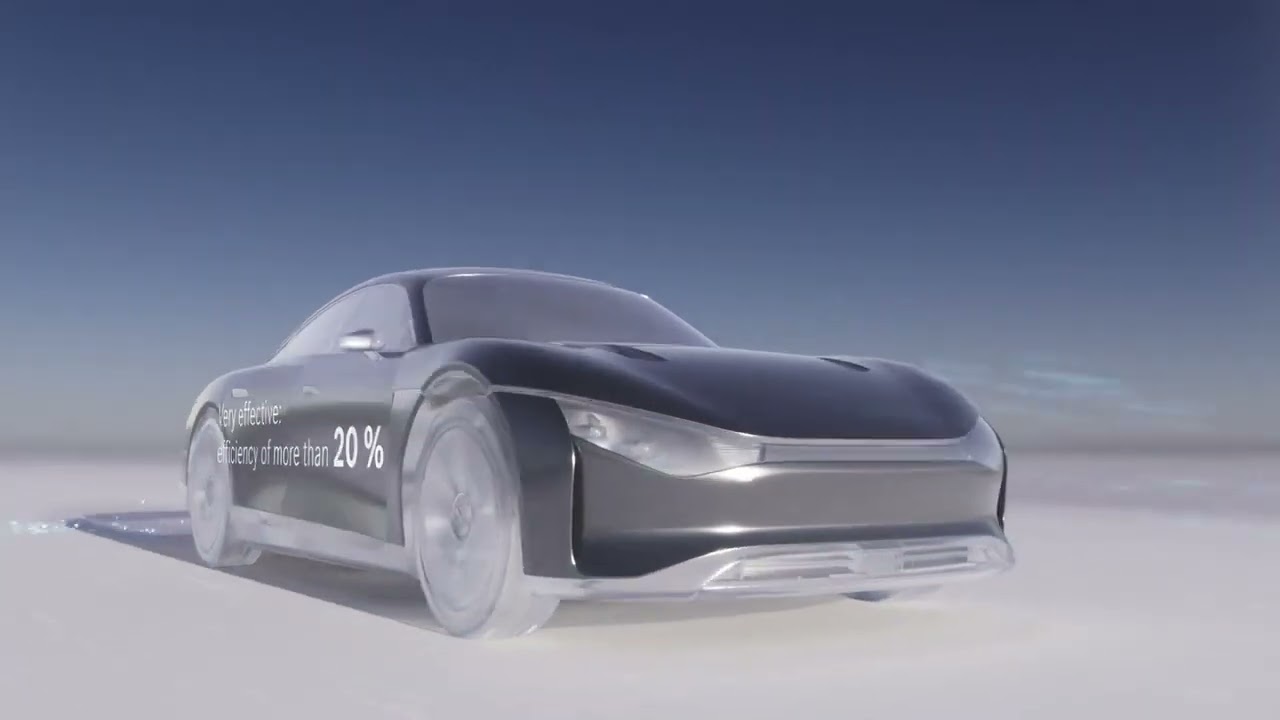
Despite being extremely lightweight, the paint packs an energy efficiency of 20%, meaning one-fifth of sunlight energy that hits its surface is converted into usable power. This is comparable to the efficiency of common solar panels.
The automaker claimed that covering a 118-square-feet (11-square-meter) area — comparable to a mid-size SUV — with the paint generated enough electricity to cover most daily driving needs. For example, drivers in Stuttgart could cover 62% of their daily commute using solar energy alone, while those in sunny Los Angeles might generate enough energy to meet 100% of their driving needs, representatives said.
The photovoltaic system generates energy even when the vehicle is off, assuming there is sunlight. The automaker suggested that excess energy could be fed back into drivers’ homes via bidirectional charging.
Unfortunately, representatives from Mercedes-Benz didn't specify exactly when (or if) its paint tech would hit the road. Instead, they said their current focus was ensuring it could be applied "on all exterior vehicle surfaces — regardless of their shape and angle."