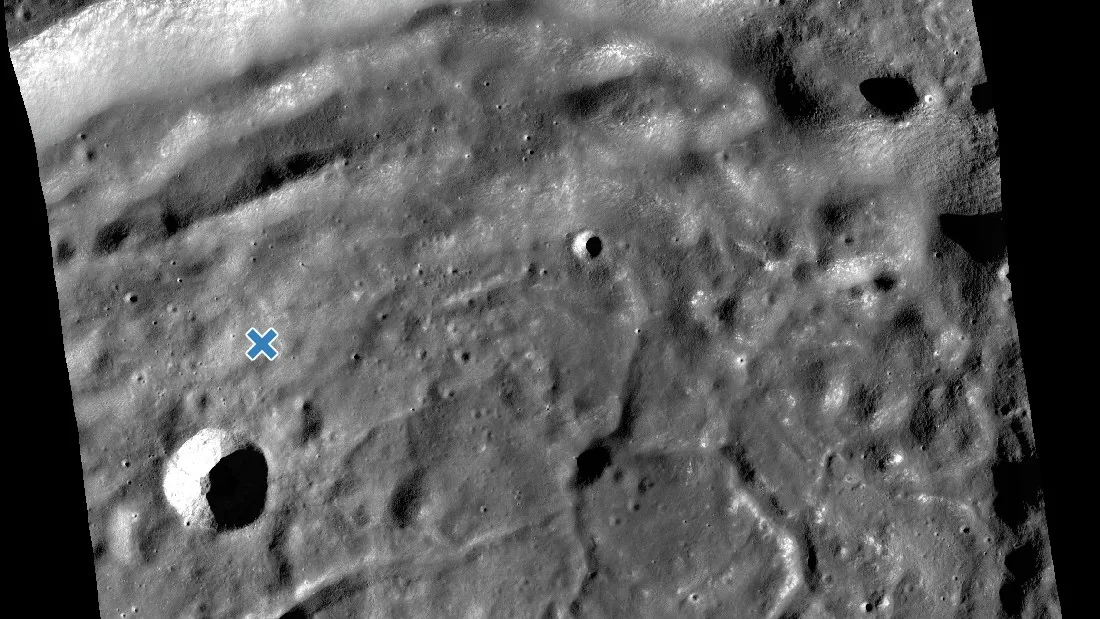
A NASA spacecraft has spotted the Japanese lunar lander Hakuto-R, which crashed into the moon's surface on April 25. Photo evidence confirms that the craft came to rest near its intended landing site in at least four large pieces.
Hakuto-R, the brainchild of the Japanese space company ispace, was set to become the first private lunar lander to successfully touch down on the moon, but it unexpectedly lost communication with ground control during its final descent. After several failed attempts to reestablish communication, ispace's team concluded that the spacecraft had suffered a "hard landing," impacting the moon rather than landing gently.
The next day, April 26, NASA's Lunar Reconnaissance Orbiter (LRO) passed over Hakuto-R's landing site, snapping 10 images. Scientists compared these images with previous photos of the region in hopes of pinpointing the Japanese lander's final resting place.
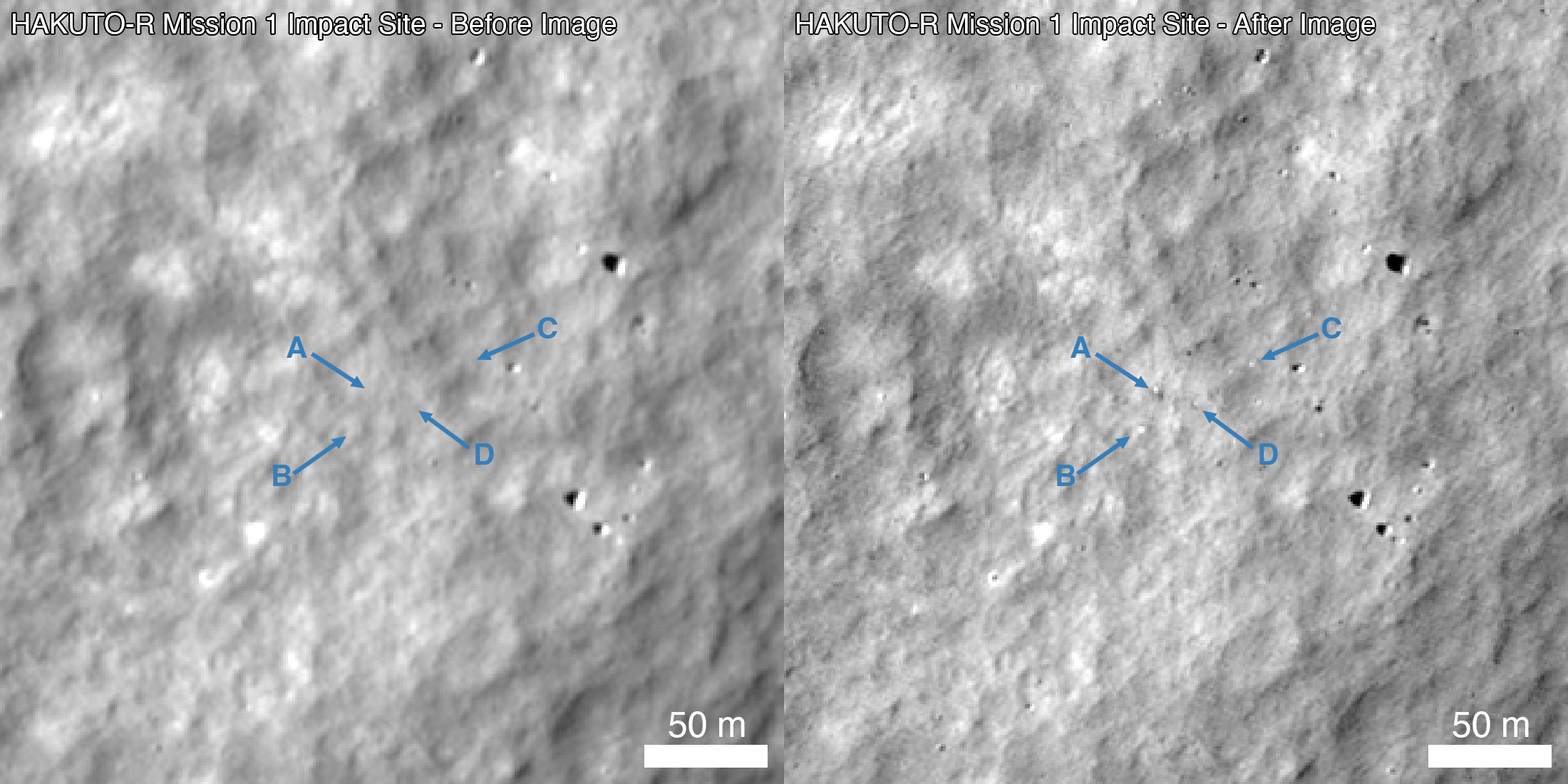
Before and after images comparing the crash site. Arrow A points to a prominent surface change. Arrows B-D point to other changes around the impact site.
(Image credit: NASA/GSFC/Arizona State University)
The team identified an "unusual surface change" around Hakuto-R's target landing site, according to a statement from researchers using the LRO Camera. Four large chunks of debris appear in the April 26 photos; these pieces were absent in the earlier photos, suggesting that they are indeed parts of the lander rather than boulders or other natural features, the researchers said. Additionally, the images show what appears to be a new small crater near the suspected crash site.
This isn't the first impact site that LRO has spotted during transit. In 2019, it also located the remains of India's Chandrayaan 2 Vikram lander and the private Israeli lander Beresheet, which may have inadvertently delivered the first tardigrades to the moon upon crashing.
Researchers will continue to analyze the site over the next few months as LRO makes another pass and has the chance to photograph the site from different angles and under different lighting conditions.
Sign up for the Live Science daily newsletter now
Get the world’s most fascinating discoveries delivered straight to your inbox.
Joanna Thompson is a science journalist and runner based in New York. She holds a B.S. in Zoology and a B.A. in Creative Writing from North Carolina State University, as well as a Master's in Science Journalism from NYU's Science, Health and Environmental Reporting Program. Find more of her work in Scientific American, The Daily Beast, Atlas Obscura or Audubon Magazine.