













Scientists discover 62 new moons around Saturn, raising total to 145 — the most in the solar system
The discovery of 62 'irregular' moons orbiting Saturn brings the planet’s total to 145 — and hints at a chaotic past.

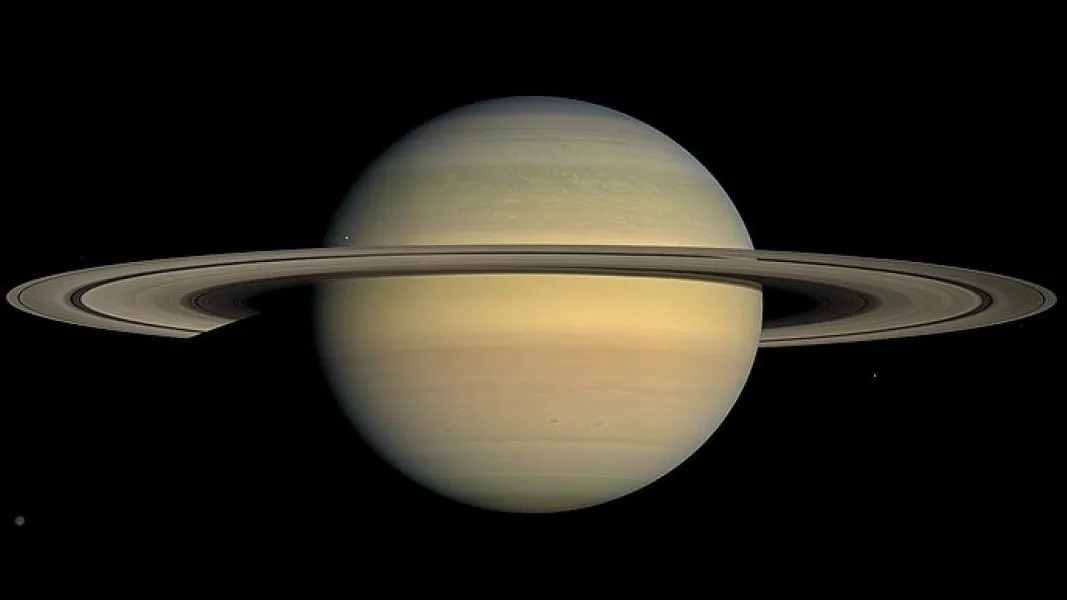
Jupiter's brief but glorious reign as the planet with the most moons in our solar system came crashing down this week as scientists confirmed the discovery of 62 new moons orbiting Saturn — bringing the ringed planet's total to a whopping 145 moons.
That's a decisive leap ahead of Jupiter's 95 confirmed moons – a total that eclipsed Saturn's moon count for several months after 12 new moons were officially recognized orbiting Jupiter in late December. Saturn is now the first and only planet in the solar system with more than 100 known moons, according to researchers at the University of British Columbia (UBC), who aided in the new discoveries.
The team of international researchers made their detections using data from the Canada-France-Hawaii Telescope on top of Mauna Kea, Hawaii between 2019 and 2021. By analyzing a trove of sequential images taken over 3-hour observation windows, the team identified 62 moons that were previously either too small or too dim to detect. Some of the smaller moons measured just 1.6 miles (2.5 kilometers) wide — a distance smaller than the length of the National Mall in Washington, D.C.
related stories
All of the 62 newly detected moons are "irregular moons," meaning they follow distant, elliptical orbits around their host planet and often move in retrograde — or in the opposite direction of Saturn's rotation. Many of these tiny, oddball moons clump together in similar retrograde orbits, suggesting they may have originated from a larger parent moon that broke apart millions of years ago, according to the researchers.
"As one pushes to the limit of modern telescopes, we are finding increasing evidence that a moderate-sized moon orbiting backwards around Saturn was blown apart something like 100 million years ago," Brett Gladman, a professor of astronomy and astrophysics at UBC, said in a statement.
The new moons are expected to be recognized later this month by the International Astronomical Union — a group of more than 12,000 scientists responsible for designating celestial bodies, among other things.
Jupiter could not be reached for comment.
Get the world’s most fascinating discoveries delivered straight to your inbox.

Brandon is the space / physics editor at Live Science. With more than 20 years of editorial experience, his writing has appeared in The Washington Post, Reader's Digest, CBS.com, the Richard Dawkins Foundation website and other outlets. He holds a bachelor's degree in creative writing from the University of Arizona, with minors in journalism and media arts. His interests include black holes, asteroids and comets, and the search for extraterrestrial life.