


-
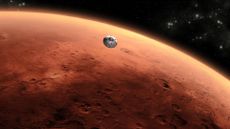 Mystery of Mars' missing water could be solved by the planet's tipsy tilt
Mars has lost immense amounts of water over it lifetime, and scientists aren't sure exactly how. New research hints that the planet's violently varying tilt may be a key factor.
mars -
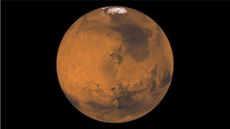 Does Mars have a moon?
Mars is smaller than Earth, but does it have any moons?
mars -
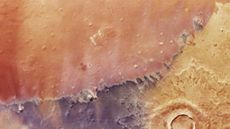 Why does Mars look purple, yellow and orange in ESA's stunning new satellite image?
Surprising colors and stunning features are captured in a new image of Mars' surface.
mars -
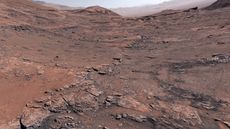 Mars rover captures first close-up photos of giant 'spiderwebs' on the Red Planet
NASA's Curiosity rover has snapped its first images of web-like "boxwork" features on the surface of Mars. The zig-zagging rocks could provide clues about the Red Planet's watery past and whether it once harbored extraterrestrial life.
2 Commentsmars -
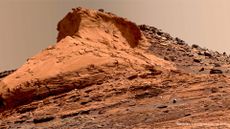 Is Mars really red? A physicist explains the truth.
Mars isn't a bright, fire-engine red, but the iron oxide in its rocks makes it appear redder than other planets, especially from afar.
mars -
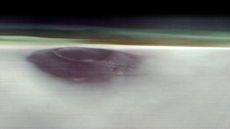 NASA spots Martian volcano twice the height of Mount Everest bursting through the morning clouds: Space photo of the week
A new panorama from NASA's Mars Odyssey orbiter shows Arsia Mons, one of the largest volcanoes on Mars, rising above a thick blanket of clouds before dawn.
mars -
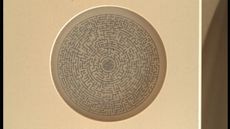 Why does NASA's Perseverance rover keep taking pictures of this maze on Mars?
NASA's Perseverance rover regularly images a Sherlock Holmes–themed maze to calibrate its chemical-hunting SHERLOC instrument.
-
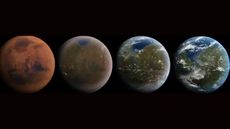 Turning the Red Planet green? It's time to take terraforming Mars seriously, scientists say
A new study debates the complex ethical questions that must be considered if we're to terraform Mars and lays the blueprint for a potential path forward.
-
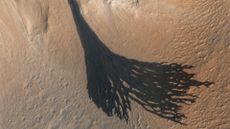 Long, dark 'streaks' spotted on Mars aren't what scientists thought
A set of dark streaks that regularly wind across the Martian surface are more likely to be formed by dust and wind than by water, a new artificial intelligence analysis has revealed.
5 Commentsmars


