













Fish get addicted to meth in polluted rivers, go through withdrawal

Fish can get hooked on meth that washes into their freshwater homes, to the point that they actively seek out the stimulant, a new study suggests.
After being used by humans, methamphetamine enters waterways through sewage systems and discharges from wastewater treatment plants. "Where methamphetamine users are, there is also methamphetamine pollution of freshwaters," first author Pavel Horký, an associate professor and behavioral ecologist at the Czech University of Life Sciences Prague, told Live Science in an email.
Meth pollutes rivers all over the world, with concentrations of the drug ranging from a few nanograms to dozens of micrograms per liter of water, according to reports in the journals Chemosphere and Water. Given the global prevalence of meth in waterways, Horký and his colleagues wondered whether fish might get hooked on these small doses of the drug.
Related: 9 weird ways you can test positive for drugs
The team's new laboratory study, published Tuesday (July 6) in the Journal of Experimental Biology, suggests that yes, even minuscule amounts of methamphetamine could be enough to cause addiction in freshwater fish, the team concluded.
That said, an expert told Live Science that, even though the fish in the study sought out meth-tainted water, that may not be enough evidence to say they are truly "addicted."
"I'm not sure you can truly say these fish are addicted to methamphetamine, but they certainly show a preference for the compound … which they shouldn't, really," said Gabriel Bossé, a postdoctoral research fellow at the University of Utah who was not involved in the study; Bossé uses zebrafish as a model to study complex brain disorders and recently developed a technique to study opioid-seeking behaviors in the fish.
Get the world’s most fascinating discoveries delivered straight to your inbox.
In regards to the new research, "it seems that the preference for meth dies down after just a few days," whereas if the fish were truly addicted, he'd expect that preference to persist over a longer period of time, he said. "Whether you call it addiction or not, you can argue, but it's clear that methamphetamine changed how these animals behave," and those effects could potentially hinder their ability to find food, avoid predators and reproduce in the wild, Bossé noted.
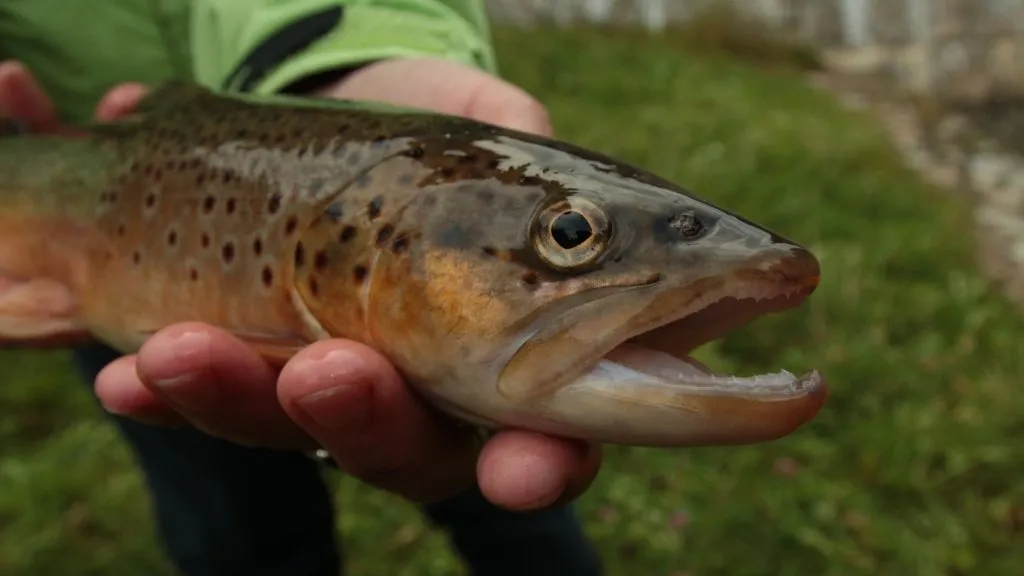
In the new study, the team specifically focused on brown trout (Salmo trutta), which are native to Europe, western Asia and northern Africa and have been introduced to every continent except Antarctica, Horký said. The researchers placed 60 trout in a drug-free holding tank and another 60 in a tank laced with 1 microgram of meth per liter of water.
The researchers had the latter group of fish soak in the meth-tainted water for two months — a step meant to simulate the effects of persistent drug exposure that might occur in a polluted river. The researchers then transferred the drugged fish into a clean tank for 10 days; if the trout had grown dependent on meth, they would begin to show symptoms of withdrawal after losing access to the drug, the team theorized.
To test for these withdrawal symptoms, the team devised an experiment where fish could choose between swimming in clean water or water with trace amounts of meth; the tank is designed such that the two streams of water don't mix but the fish can still swim between them. When previously exposed fish showed a preference for the meth-tainted water in the experiment, that was taken as a sign of addiction to the drug, Horký told Live Science.
The team ran select fish through this experiment on the second, fourth, sixth, eighth and 10th days after they'd been moved to the drug-free tank; they also ran drug-free fish through the same experiment, as a point of comparison. They found that, in the first four days after the tank swap, the meth-exposed fish showed a stronger preference for drugged water, compared with the fish that had not been exposed to meth. This difference waned the more time the exposed fish spent in the drug-free tank.
RELATED CONTENT
The researchers also noted that, in general, the meth-exposed fish became somewhat sedentary in these first four days of withdrawal, while the drug-free fish swam about as usual. This lack of movement hinted that the fish were stressed out due to their meth withdrawal, the authors suggested; scientists have seen similar behavior in zebrafish that were experiencing withdrawal from opioids, according to a 2017 report by Bossé published in the journal Behavioural Brain Research.
To get better insight into these behavioral changes, the team took samples of the fishes' brain tissue and screened them for both methamphetamine and amphetamine, a metabolic byproduct of the drug.
They found that "there were differences in concentration of amphetamine and methamphetamine that were shown to be related to changes in behavior," Horký said. The amount of amphetamine in the brain, which would indicate a past exposure to meth, correlated with the subdued swimming behavior seen in the trout experiencing withdrawal. Conversely, methamphetamine appeared in the brains of fish that chose to swim in the drugged water during the behavioral experiment; this acute exposure correlated with an uptick in swimming, again hinting that the meth offered relief from withdrawal in addicted fish.
Taken together, these results suggest that, in the wild, brown trout could become addicted to trace amounts of meth in rivers and potentially congregate in areas where the drug accumulates, the authors reported. Such "unnatural attraction to one area" could not only disrupt the fishes' migratory patterns but also undermine their success in foraging for food or finding mates, they wrote.
But again, while Bossé agrees that meth exposure could undermine the fishes' survival, he's not fully convinced the animals are addicted to the drug. The authors could strengthen their case with slight tweaks to their current experiment, he noted.
Firstly, they could allow the fish more time to explore the tank with a meth-tainted section; given hours, instead of minutes, as in the current study, the fish might learn where the meth can be accessed and show more persistant drug-seeking behavior. Their preference for the meth-tainted water could even be tested over several days, to see if they consistently gravitate to the contaminated water after being denied access to the drug, he said.
In addition, the team could do additional tests to show the animals are truly in a stressed-out, withdrawal state; for example, they could measure the animals' cortisol levels and run them through formal stress tests, Bossé said. With zebrafish, these stress tests include observing what the fish do when placed in unfamiliar tanks or tanks with one darkened side, which the fish prefer, and one brightly-lit side.
In any case, since the new study was conducted in a laboratory setting, the team still needs to investigate whether the observed patterns of addiction and withdrawal occur in wild fish populations, too, Horký said. There's also the question of how meth mingles with other contaminants in the water, including other drugs, like antidepressants, and how all these substances collectively mess with fish behavior, he noted.
"There are a lot of contaminants of emerging concern — not only illicit drugs, but also standard prescription medicines, like antidepressants," Horký said.
Originally published on Live Science.

Nicoletta Lanese is the health channel editor at Live Science and was previously a news editor and staff writer at the site. She is a recipient of the 2026 AHCJ International Health Study Fellowship, with a project focused on antibiotic stewardship practices in Japan and the U.S. They hold a graduate certificate in science communication from UC Santa Cruz and degrees in neuroscience and dance from the University of Florida. Beyond Live Science, Lanese's work has appeared in The Scientist, Science News, the Mercury News, Mongabay and Stanford Medicine Magazine, among other outlets. Based in NYC, she also remains involved in dance and performs in local choreographers' work.