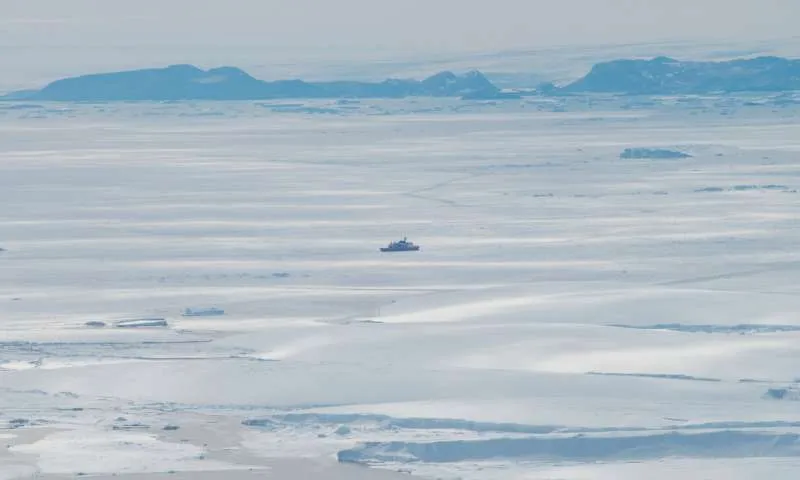
Researchers have discovered a deep underwater trough in Antarctica that could spell doom for one of the continent's vulnerable ice shelves.
Located hundreds of feet below the Shirase Glacier in East Antarctica, the trough appears to be funneling warm ocean water directly against the base of the glacier's ice shelf (known as the Shirase Glacier Tongue), which juts out into the nearby bay like a frosty peninsula. This pipeline of warm water is causing the tongue to melt from the bottom up at an alarming rate; according to a new study published online Monday (Aug. 24) in the journalNature Communications, the base of the Shirase Glacier Tongue is losing 22 to 52 feet of ice per year (7 to 16 meters) –- potentially making it the fastest-melting region in East Antarctica.
"This is equal to or perhaps even surpasses the melting rate underneath the Totten Ice Shelf, which was thought to be experiencing the highest melting rate in East Antarctica, at a rate of 32 to 36 feet per year (10 to 11 meters per year)," study author Daisuke Hirano, an assistant professor at Hokkaido University's Institute of Low Temperature Science in Japan,said in a statement.
Warm sea water hundreds of feet below the ocean's surface swoops along an undersea trough, melting the base of the Shirase Glacier Tongue and flushing the meltwater back out to sea.
(Image credit: Daisuke Hirano et al., Nature Communications)
If the entire ice sheet melts, it could raise global sea levels by 200 feet (60 m) — but even a rise of 2 feet (60 centimeters) could put hundreds of millions of people at risk of losing their homes (or their lives) to flooding, UN research has shown.
Still, the melt rates for many regions of Antarctica remain poorly studied, as thick sea ice can prevent research vessels from getting close enough to make needed observations. That was the case for East Antarctica's Shirase Glacier, until a huge ice-calving event in late 2016 finally opened a path to the glacier.
In early 2017, scientists aboard a Japanese research vessel sailed close enough to the Shirase Glacier Tongue to analyze 31 different points around the ice shelf, measuring the temperature, salinity and oxygen levels of the surrounding water. From these variables, the team estimated how much melted freshwater had mixed in with the salty sea water, and where the warmest currents flowed. Radar measurements helped them better map the area's undersea geography.
Sign up for the Live Science daily newsletter now
Get the world’s most fascinating discoveries delivered straight to your inbox.
The study revealed an "atypical hotspot" of warm ocean water rushing along a previously unknown trough, hundreds of feet below the Shirase Glacier Tongue. That warm water collides with the glacier's edge and ricochets upward, strafing against the bottom of the ice tongue before u-turning back toward the sea again — taking loads of melted ice with it, the team found.
While the fate of a single ice shelf isn't enough to drastically change the outlook for future sea-level rise, understanding how ocean currents interact with little-studied parts of the Antarctic ice sheet is a crucial part of predicting how quickly the continent could succumb to climate change.
"We plan to incorporate this and future data into our computer models, which will help us develop more accurate predictions of sea level fluctuations and climate change," Hirano said.
Brandon is the space / physics editor at Live Science. With more than 20 years of editorial experience, his writing has appeared in The Washington Post, Reader's Digest, CBS.com, the Richard Dawkins Foundation website and other outlets. He holds a bachelor's degree in creative writing from the University of Arizona, with minors in journalism and media arts. His interests include black holes, asteroids and comets, and the search for extraterrestrial life.