













Nobel Prize in chemistry awarded to trio who discovered bizarre quantum dots
Moungi Bawendi, Louis Brus and Alexei Ekimov will share the Nobel Prize in Chemistry for their discovery of strange nanoparticles that change color according to their size.

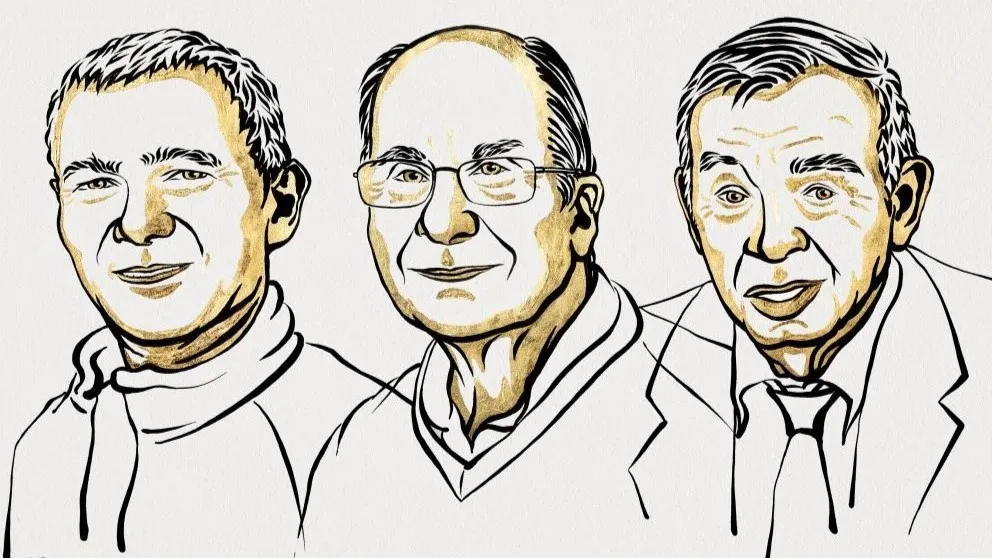
The 2023 Nobel prize in chemistry has been awarded to three scientists for the discovery and development of quantum dots — super-tiny semiconductors that can be used in LED lights and TV screens, as well as to aid doctors in the removal of cancer tissue.
Moungi Bawendi, professor of chemistry at MIT, Louis Brus, professor emeritus at Columbia University, and Alexei Ekimov, a physicist at Nanocrystals Technology Inc. in New York, will share the 11 million Swedish krona (around $1 million) prize for their role as "pioneers in the exploration of the nanoworld," the Royal Swedish Academy of Sciences in Stockholm said at a news conference Wednesday (Oct. 4).
"For a long time, nobody thought you could ever actually make such small particles," Johan Åqvist, the chair of the Nobel committee for chemistry, said at a news conference announcing the 2023 laureates. "But this year's laureates succeeded."
Related: Quantum 'yin-yang' shows two photons being entangled in real-time
RELATED STORIES
Quantum dots are crystals of lead sulfide or cadmium selenide consisting of just a few thousand atoms, and are as small as one-10,000th the width of a human hair.
The tiny size of these particles means they sit somewhere between the quantum realm and the macro world, giving them a weird jumble of semi-quantum properties. For instance, if you change a quantum dot's size by swapping out atoms, it will suddenly change color.
This bizarre quantum behavior means the dots are perfect for imaging technology, making LCD screens more vibrant and medical procedures more accurate.
Get the world’s most fascinating discoveries delivered straight to your inbox.
Bawendi was "sound asleep" when he got the call that he had won the prize and felt "very surprised, sleepy, shocked, unexpected and very honored," he said over the phone at the news conference.

Ben Turner is a U.K. based writer and editor at Live Science. He covers physics and astronomy, tech and climate change. He graduated from University College London with a degree in particle physics before training as a journalist. When he's not writing, Ben enjoys reading literature, playing the guitar and embarrassing himself with chess.