













Hundreds of centuries-old coins unearthed in Germany likely belonged to wealthy 17th-century mayor
Construction workers have unearthed a collection of 285 silver coins hidden in a trench.
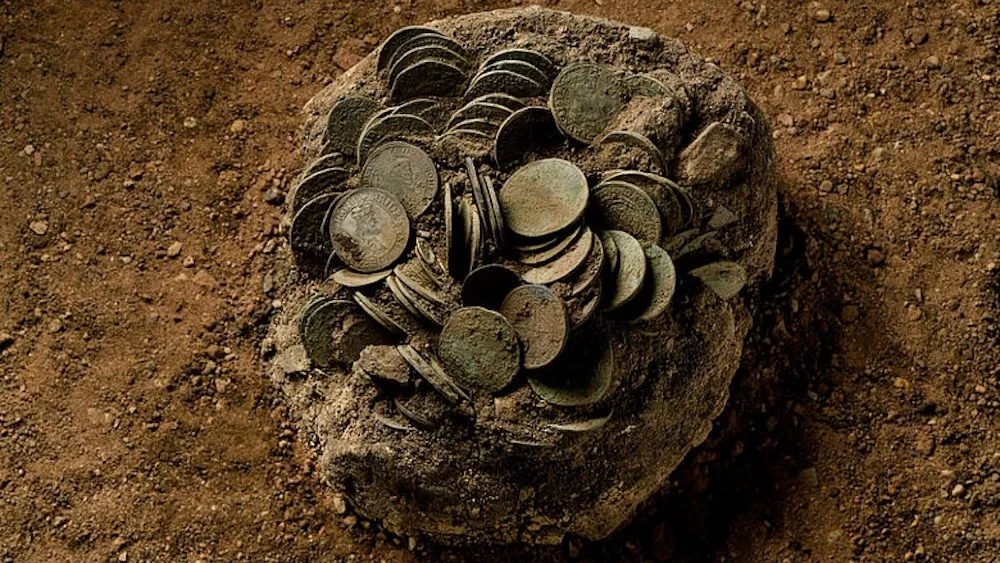
Construction workers in Germany have unearthed hundreds of coins that likely belonged to a 17th-century mayor.
The "hidden" coin collection, which includes 285 silver coins originating between 1499 and 1652, was found in a trench as workers installed a new sewer line at a farmstead in Wettin, a town in east-central Germany, according to a translated statement.
The hoard contains a mix of large-format silver coins, including silver thalers minted by the Holy Roman Empire, and foreign coins. While most of the finds were regional Saxon coins, there were some rarer pieces of currency, such as a handful of Schreckenberg groschen coins, which would have been used regionally; an Italian scudo from 1630; and a tallero minted in 1620 by the grand duke of Tuscany.
Experts think the treasure was likely buried after the end of the Thirty Years' War (1618 to 1648) — a conflict that was largely fought in Central Europe and led to an estimated 8 million deaths.
RELATED STORIES
After years of sitting underground, the coins took on a greenish tint. Based on the array of coins in the collection, experts concluded that the hoard likely belonged to Johann Dondorf, who served as mayor of Wettin in the late 1660s and was one of the town's "richest citizens," according to the statement.
During Dondorf's mayorship, Wettin was an "extremely wealthy brewing town during and after the Thirty Years' War," and his wealth became evident upon his death in 1675. When the court estimated his estate after his passing, it determined that he had accrued more than 2,500 thalers and 500 ducats (gold coins), which he had hidden in rooms throughout his home. Based on the recent discovery, however, it's clear that the court's tally was short.
Get the world’s most fascinating discoveries delivered straight to your inbox.
Jennifer Nalewicki is former Live Science staff writer and Salt Lake City-based journalist whose work has been featured in The New York Times, Smithsonian Magazine, Scientific American, Popular Mechanics and more. She covers several science topics from planet Earth to paleontology and archaeology to health and culture. Prior to freelancing, Jennifer held an Editor role at Time Inc. Jennifer has a bachelor's degree in Journalism from The University of Texas at Austin.