













11,000-year-old settlement in Canada could rewrite history of Indigenous civilizations in North America
The discovery of an 11,000-year-old village in Saskatchewan could rewrite Indigenous history in central Canada.

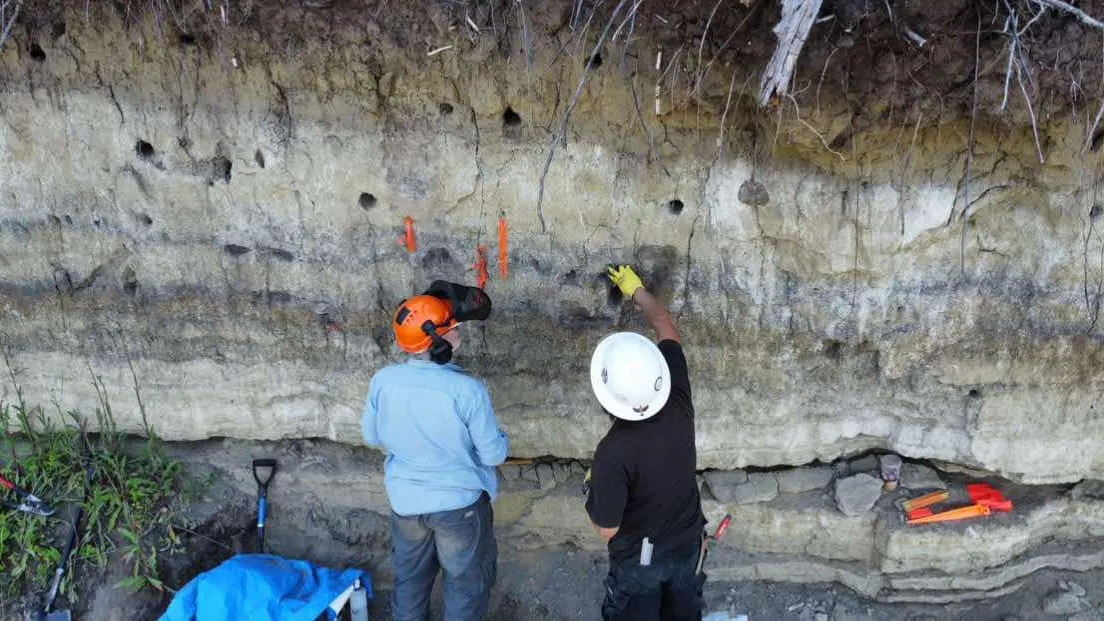
An 11,000-year-old settlement in Canada is challenging the idea that early Indigenous people were nomadic. The newly uncovered village site of Âsowanânihk, which means "a place to cross" in the Cree language, is one of the oldest archaeological sites found on the continent and suggests that an organized society existed in central Canada far earlier than experts previously thought.
"This site is shaking up everything we thought we knew and could change the narrative of early Indigenous civilizations in North America," amateur archaeologist Dave Rondeau, who first identified the site in 2023, said in a Feb. 4 statement.
Evidence already recovered from Âsowanânihk, located in the Sturgeon Lake First Nation (SLFN) in central Saskatchewan, includes stone tools, firepits and bison bones, according to the statement. A very large firepit suggests that the site was used for a long period, or repeatedly for shorter periods, according to Glenn Stuart, an archaeologist at the University of Saskatchewan who is involved in the project. Such use indicates that the settlement was likely a long-term one, rather than a temporary hunting camp, where Indigenous hunters strategically harvested the extinct Bison antiquus.
Charcoal from one of the hearths was radiocarbon-dated to about 10,700 years ago, Stuart told Live Science in an email. This means that people were living in the village just after the last ice age ended, when there was finally land suitable for plants to grow.
RELATED STORIES
"This indicates that people arrived in this location as soon as it was habitable," Stuart said, "and then continually reoccupied the site for thousands of years. Ancestral First Nations have been living in the area west of [the city of] Prince Albert for as long as it has been possible to live in the area."
"This discovery is a powerful reminder that our ancestors were here, building, thriving, and shaping the land long before history books acknowledged us," SLFN Chief Christine Longjohn said in the statement. "This site speaks for us, proving that our roots run deep and unbroken," she said.
Get the world’s most fascinating discoveries delivered straight to your inbox.
The site of Âsowanânihk is currently being studied by archaeologists, including Stuart, alongside the SLFN's Âsowanânihk Council, which includes Elders, Knowledge Keepers and educators. The council is also working with local stakeholders to protect the site, which was originally identified because it was eroding out of a riverbank and now faces potential destruction from logging activities in the area.

Kristina Killgrove is a staff writer at Live Science with a focus on archaeology and paleoanthropology news. Her articles have also appeared in venues such as Forbes, Smithsonian, and Mental Floss. Kristina holds a Ph.D. in biological anthropology and an M.A. in classical archaeology from the University of North Carolina, as well as a B.A. in Latin from the University of Virginia, and she was formerly a university professor and researcher. She has received awards from the Society for American Archaeology and the American Anthropological Association for her science writing.
You must confirm your public display name before commenting
Please logout and then login again, you will then be prompted to enter your display name.