 Live Science Plus





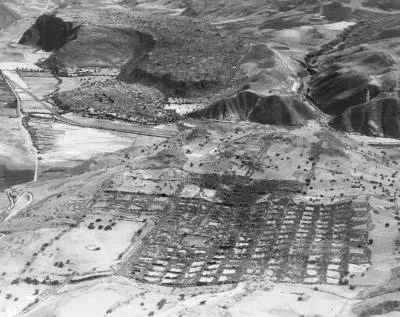
The Wari, an ancestor culture to the Incas that flourished throughout the Andean Highlands, expanded their reign largely through trade and semiautonomous colonies, rather than through the iron fist of conquest and centralized control, new research suggests.
To reach that conclusion, detailed this month in the Journal of Anthropological Archaeology, researchers looked at the settlement patterns of the pre-Columbian culture.
Article continues below"The identification of limited Wari state power encourages a focus on colonization practices rather than an interpretation of strong provincial rule," said study lead author R. Alan Covey, an anthropologist at Dartmouth College in New Hampshire. "A 'colonization first' interpretation of early Wari expansion encourages the reconsideration of motivations for expansion, shifting from military conquest and economic exploitation of subject populations to issues such as demographic relief and strategic expansion of trade routes or natural resource access."
From their central city of Pikillacta, the Wari ruled much of present-day Peru between A.D. 600 and 1000. Though the ancient culture left no documents, thousands of archaeological sites, including untouched royal tombs, around Peru's Cusco Valley reveal much about their lives.
Covey and his colleagues used archaeological surveys and geographic mapping to systematically analyze the land-use practices of the Wari across 1,000 square miles (2,600 square kilometers) at about 3,000 archaeological sites.
The team found that, rather than radiating out in a continuous circle from Pikillacta, a huge city with massive investment, the Wari area of rule was patchier. Ceramics from many of the sites show the Wari cultural influence was often limited and indirect.
The findings suggest the Wari, unlike their descendants the Incas, weren't quite able to bring colonies directly under their rule.
Instead, the Wari likely expanded when trade routes opened or when they needed access to specific natural resources, the study suggests.
Follow Tia Ghose on Twitter and Google+. Follow LiveScience @livescience, Facebook & Google+. Original article on LiveScience.

