
 Live Science Plus





Drinking tears
Two on one

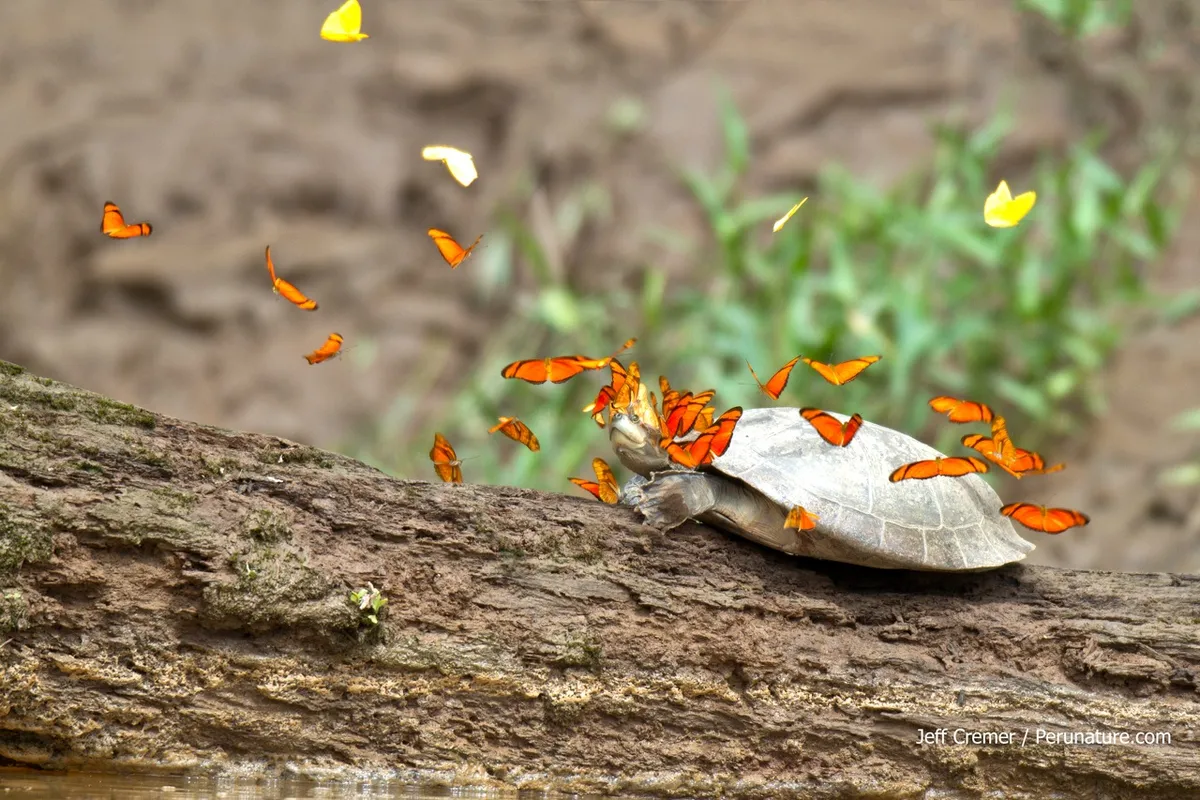
Here are several butterflies going after a single yellow-spotted river turtle. The turtle's tears contain salt, specifically sodium, an important mineral that is scant in the western Amazon.
Blinded by butterflies

The western Amazon is lower in sodium than many places on Earth, because it is more than 1,000 miles (1,600 kilometers) from the Atlantic Ocean, a prime source of salt, and is cut off from windblown mineral particles to the west by the Andes Mountains. Dust and minerals make their way into the Amazon from the east, sometimes all the way from north Africa. But much of this material is removed from the air by rain before it reaches the western Amazon, said Phil Torres, a conservation biologist who does much of his research at the Tambopata Research Center in Peru.
Article continues belowBuzz off

Bees can also be attracted to the turtles. They appear to annoy the animals more than butterflies, perhaps because of their buzzing wings, Torres said.
Turtles in a row

Unlike butterflies, turtles get plenty of sodium through their carnivorous diet. Meat contains significant levels of the salt, Torres told LiveScience. But herbivores sometimes struggle to get enough sodium and other minerals, he added. "They end up needing this extra mineral source," he said.
Puddling

Turtle tears are not the only source of such salts for butterflies; the insects also readily get the salt from animal urine, muddy river banks, puddles, sweaty clothes and sweating people, said Geoff Gallice, a graduate student of entomology at the Florida Museum of Natural History, who has witnessed butterflies flocking to turtle tears in the western Amazon rain forest. Here butterflies are witnessed "puddling," gathering minerals from mud.
Obstructed vision

One question that arises: Does the butterfly feeding help, hurt or have no impact on the turtles? Torres said it's not completely clear, but the teary endeavor probably has little impact on the turtles, other than perhaps making them more vulnerable to predators like big cats, since the butterflies can obstruct their vision.
Easier to photograph

In fact, the turtles — blinded and drowning in butterfly kisses — are sometimes easier to photograph than unadorned animals, which may be able to spot an approaching photographer more easily. The photos were taken by Jeff Cremer, marketing director for Rainforest Expeditions, an ecotourism company that hosts guests in the Peruvian Amazon and organizes trips to the jungle.

