 Live Science Plus






Where is the Suicide Belt?
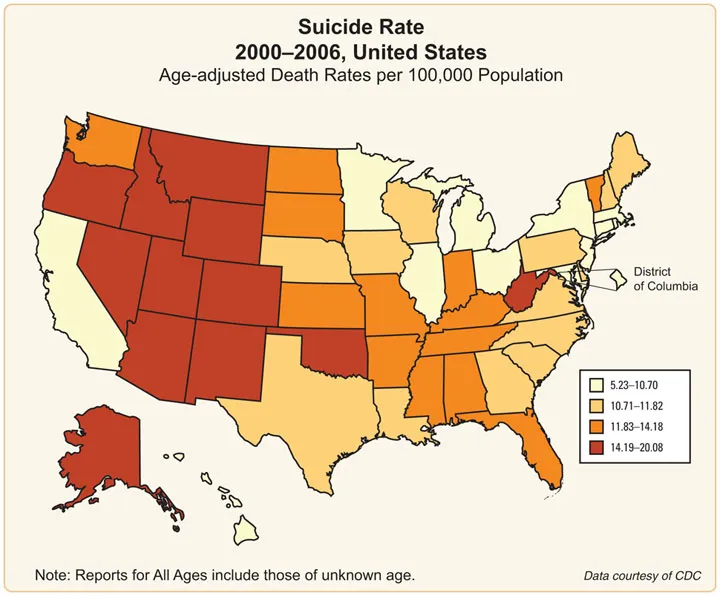
The "suicide belt" is a region of the Western United States where the suicide rate is particularly high compared with the national average.
The belt is comprised of Arizona, Colorado, Idaho, Montana, Nevada, New Mexico, Oregon, Utah and Wyoming, according to a 2011 report by the University of Nevada, Las Vegas (UNLV).
Article continues belowSociologist Matt Wray of UNLV originally deemed this swath of the United States the suicide belt when he noticed the suicide trend in the early 2000s. Looking closer at the data, he determined several key factors that could lead to these states' high suicide rates.
"The Intermountain West is a place that is disproportionately populated by middle-aged and aging white men, single, unattached, often unemployed, with access to guns," Wray told Freakonomics Radio in the 2011 episode "The Suicide Paradox."
"This may turn out to be a very powerful explanation and explain a lot of the variance that we observe," Wray said. "It’s backed up by the fact that the one state that is on par with what we see in the suicide belt is Alaska."
In 2009, suicide was the 10th leading cause of death among people over 10 years old, according to the Centers for Disease Control and Prevention.
And just how are people killing themselves? As Wray suggests, men predominately use firearms: CDC data shows that 56 percent of male suicides from 2005 to 2009 involved firearms. But most women (about 39 percent) committed suicide by poisoning themselves.
Follow LiveScience on Twitter @livescience. We're also on Facebook & Google+.

