Scientists Create Molecule-Size Keypad Lock

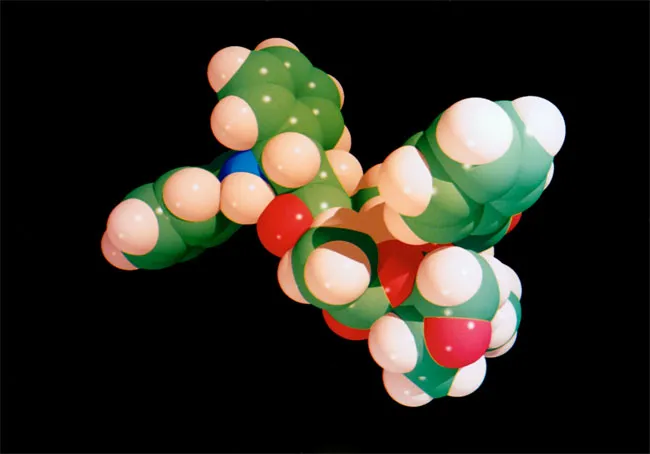
Scientists have created a keypad lock a single molecule in size. This lock only activates when exposed to the correct password, a sequence of chemicals and light.
Researchers suggest their device could in the future lead to a new level of safeguards for secret information. This lock might also serve to recognize when certain sequences of chemicals are released in the body--for instance, after exposure to Sarin or another deadly chemical or biological weapon.
Organic chemist Abraham Shanzer and his colleagues at the Weizmann Institute of Science in Rehovat, Israel, began with a molecule named FLIP. At its core is a component dubbed a "linker" that mimics a bacterial compound that binds to iron. Attached to it are two molecules that respectively can glow either blue or green.
There are essentially three "buttons" that scientists can use with this molecular kedypad lock. These are an acidic molecule, an alkaline compound, and ultraviolet light.
When the lock is exposed to one sequence of chemicals and light--the alkaline molecule, followed by ultraviolet light--it will emit blue light. When the lock is given another "password"--the acid, then the alkaline, and finally ultraviolet light--it will glow green.
These reactions only take place if each input is given within three minutes of each other, or the lock will essentially reset. Any other combination will have relatively little to no effect. In essence, this keypad resembles a simple ATM banking machine authorized for two different passwords, the researchers said.
Scientists can in principle design molecular keypad locks that accept any number of different inputs, for more complex devices that respond, say, only to long sequences of light pulses. "This opens up many new directions," Shanzer told LiveScience.
Get the world’s most fascinating discoveries delivered straight to your inbox.
Shanzer and his colleagues reported their findings online December 19 via the Journal of the American Chemical Society.