













What Causes Mudslides?
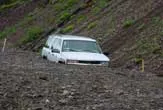
Heavy rains in China set off mudslides that washed away part of the town of Zhouqu, in the province of Gansu, and left more than 330 people dead and many more missing.
But heavy rains aren't the only thing that can trigger a mudslide, according to experts.
A sub-category of landslides, mudslides are rivers of rock, earth and other debris that are saturated with water, according to the U.S. Geological Survey (USGS). Mudslides can be slow- or fast- moving, though they tend to grow in size and momentum as they pick up trees, boulders, cars and other materials.
Mudslides can occur at any time of the year, regardless of weather conditions, according to the Federal Emergency Management Agency (FEMA). And they can strike without any prior warning signs, making for a dangerous phenomenon.
"Mudslides occur in all 50 U.S. states and can happen at any time – with or without rainfall," said Lynn Highland, a geographer at the USGS National Landslide Center.
Earthquakes, volcanic eruptions, changes in groundwater levels, alternate freezing and thawing, and the steepening of slopes by erosion all contribute to mudslides.
Construction and reckless modification of land – such as not draining an area properly before building on or near it – can also create the conditions ripe for a mudslide, Highland said.
Get the world’s most fascinating discoveries delivered straight to your inbox.
She added, prolonged, intense precipitation and run-off can contribute to landslides, as can wildfires. Fires lead to mudslides because burning can kills the plants' roots. Roots hold soil together, stabilizing the land and making it less likely to be swept away, according to Highland. In this way, overgrazing can also contribute to mudslides.
Because different areas of land have different soil compositions, as well as varying slopes and geographic characteristics, it is difficult to determine how prone a place is to mudslides and therefore near impossible to predict when one will hit – although they are known to occur in areas previously hit by mudslides, according to the USGS.
"The West Coast is especially susceptible to mudslides because of the earthquakes, rainfall and wildfires that happen in that region," Highland told Life's Little Mysteries. "In California, there is a 'mudslide season' lasting from December to April, during which time the rainfall is fairly predictable."
Because California wildfires leave behind charred slopes, the region is especially susceptible to mudslides during and immediately after major rainstorms. However, sometimes damage caused by a mudslide can take days or even weeks to surface.
An example of this 'delayed triggering' of deeper landslides occurred in Los Angeles, Calif., in 1998, when mudslides forced the evacuation of more than 100 people and destroyed several houses five days after the rain had stopped, according to the California Geological Survey (CGS).
More than 100 Californians have been killed by land and mud slides during the last 25 years, according to the CGS. Most of these deaths were due to people being buried by debris flows as they slept in lower-floor bedrooms that were near hazardous slopes.
- What's the Deadliest Natural Phenomenon?
- 7 Ways the Earth Changes in the Blink of an Eye
- How Do Sinkholes Form?
This article was provided by Life's Little Mysteries, a sister site to LiveScience.