













Chimpanzee Gangs Kill for Land

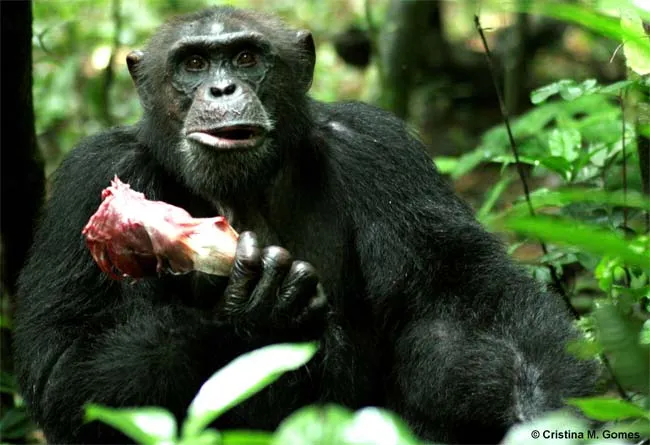
Chimp-on-chimp attacks in the wild are very common, especially among small packs of males on patrol. Now research suggests the motive for these crimes is to gain territory.
To understand this violence, researchers studied a large group of chimpanzees living in Ngogo, Kibale National Park in Uganda. After monitoring the group for over a decade, scientists counted 21 chimp-on-chimp murders.
Of those crimes, the researchers witnessed 18 directly, and deduced three from circumstantial evidence. They think as many as 13 of the victims belonged to a single neighboring group.
"The take-home is clear and simple," said researcher John Mitani of the University of Michigan. "Chimpanzees kill each other. They kill their neighbors. Up until now, we have not known why. Our observations indicate that they do so to expand their territories at the expense of their victims."
After some of these neighboring competitors were dispatched with, the researchers observed the Ngogo chimpanzees beginning to use a large portion of new territory to the northeast of their previous range. That piece of evidence allowed the researchers to link the murders with a motive – that of gaining new ground.
The scientists think the new land offers greater access to food, and potentially to females.
The attacks seem to be triggered when bands of chimpanzees go out patrolling into the territory of a neighboring chimpanzee group.
Get the world’s most fascinating discoveries delivered straight to your inbox.
"Patrollers are quiet and move with stealth," Mitani said. "They pause frequently to scan the environment as they search for other chimpanzees. Attacks are typically made only when patrolling chimpanzees have overwhelming numerical superiority over their adversaries."
This tends to happen often for the Ngogo chimpanzees, who have a particularly large group of more than 150 individuals — about three times the number found in chimp communities studied elsewhere. That advantage may explain the surprisingly high level of violence observed, the researchers said.
Mitani and colleagues described the research in the June 22 issue of the journal Current Biology.
- Top 10 Missing Links
- Fight, Fight, Fight: The History of Aggression
- Top 10 Animals That Use Tools
