Ancient Sculptures Coated in Blood

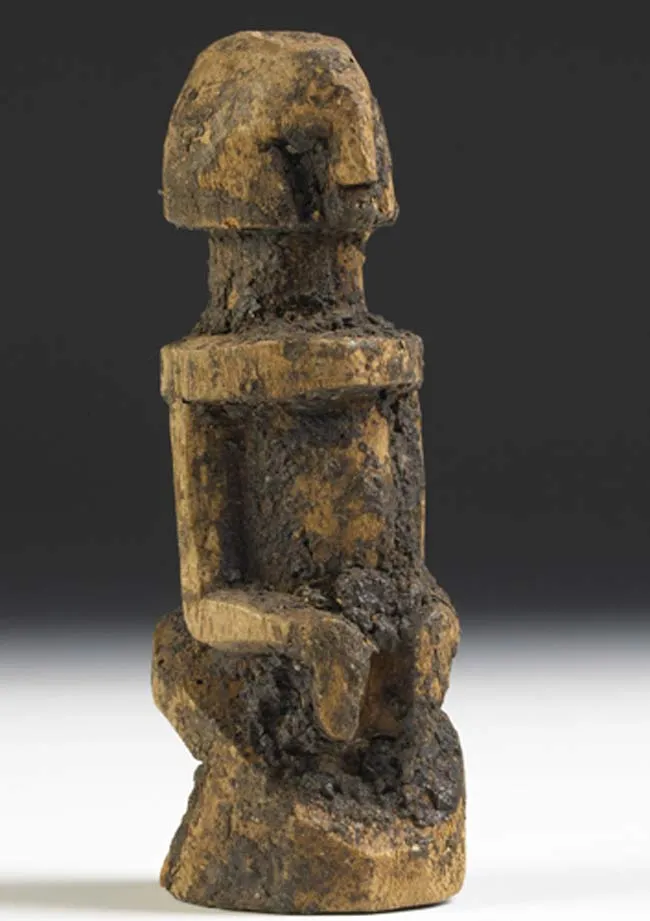
Sculptors from the extraordinarily wealthy ancient Mali Empire—once the source of nearly half the world's gold—at times coated their works of art with blood, scientists confirmed for the first time.
At its height, the empire, which lasted from the 13th century to the 17th century, extended over an area larger than Western Europe and was renowned for its gold mines.
Researchers have often reported or suspected the presence of blood on many African relics, purportedly shed during ancient ceremonies involving animal sacrifice. While crusts or patinas supposedly made of blood have been found on many such artifacts, accurately confirming the presence of blood has proven hard because little has remained on the objects over the ages.
Scientists in France have now used advanced technology to identify blood on Mali sculptures. The technique cannot tell if the blood is from animals or humans, although past interviews conducted by anthropologists suggest it is animal blood.
Chemical fingerprints
The researchers focused on eight statuettes dating from the 12th century to the 20th century.
Three wooden humanoid artifacts came from the Dogon tribe, while five from the Bamana tribe were sacred bamboo or wooden relics known as boliw that had animal shapes. Their dark crusts were said to be made of blood from ritually sacrificed animals along with millet mush, shea butter—made from the fat of a shea nut—or palm wine.
Get the world’s most fascinating discoveries delivered straight to your inbox.
The investigators scraped microscopic samples of the patina off the statues. They next bombarded the samples with particle beams and high-intensity light rays that did virtually no damage.
These highly sensitive tests identified chemical fingerprints of blood—such as components of hemoglobin and iron linked with proteins—on seven of the eight statuettes. The last remained inconclusive.
Only vestiges
Researcher Pascale Richardin, an analytical chemist at the Center for Research and Restoration for the Museums of France in Paris, said these artifacts are often the only vestiges of practices that were essential elements of African civilizations.
"A better knowledge of these patinas could explain some practices used for centuries," Richardin told LiveScience.
Richardin and her colleagues detailed their findings in the Dec. 15 issue of the journal Analytical Chemistry.
- Top 10 Ancient Capitals
- Top 10 Reasons Alexander the Great Was, Well ... Great!
- History's Most Overlooked Mysteries