Healthier Tomatoes Grown in Seawater

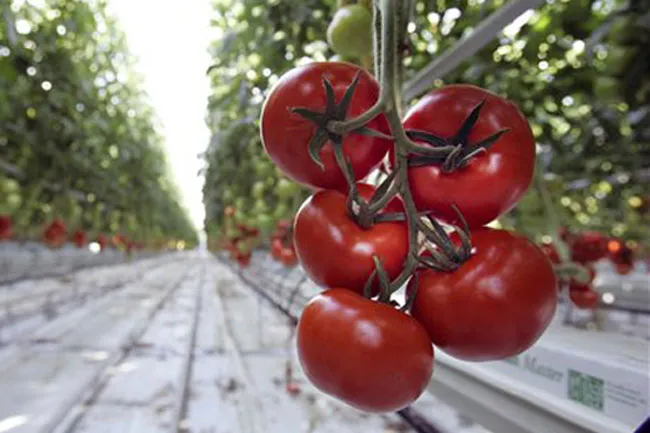
Tomatoes irrigated with diluted seawater grow with significantly higher levels of healthy antioxidant compounds, new research shows.
"It'd be interesting to see if this might be a more general phenomenon, where a little salt induces antioxidants in lots of crops," said botanist Edward Glenn at the University of Arizona, who did not participate in the new study. "There could be a consumer wave toward salt-tolerant crops based on their nutritional properties."
The option to use salty water on crops might help farmers deal with growing irrigation woes. Irrigation water, as well as drinking water, is growing scarce and deteriorating in quality around the world.
Nearly 70 percent of all available freshwater is used for agriculture. Use of water for irrigation has increased globally by more than 60 percent since 1960, according to United Nation statistics. At the same time, poor irrigation and drainage practices have led to salt buildup in roughly one-eighth of all irrigated land.
Although desalination plants that remove salt from saltwater now exist, they remain expensive. For example, distillation processes that separate out any dissolved minerals by boiling and condensing water require costly amounts of fuel.
Riccardo Izzo at the University of Pisa in Italy and his colleagues reasoned that diluted saltwater could drive crops to generate more healthy antioxidants, such as vitamins C or E. Plants generate antioxidants to protect themselves when stressed out by salt, drought or various other burdens.
The researchers investigated tomatoes, which are grown worldwide and are moderately salinity tolerant. They grew various types of tomatoes, including those commonly used for salads, under different levels of salinity and investigated the fruit for nutrients.
Get the world’s most fascinating discoveries delivered straight to your inbox.
The researchers found that growing tomatoes in 10 percent seawater improved antioxidant levels significantly, findings they detailed in the April 4 issue of the Journal of Agricultural and Food Chemistry.
Glenn noted the water that percolates out from normally irrigated soil, technically known as irrigation return flow, is often as salty as 10 percent seawater. "About a third of irrigation water becomes irrigation return flow, so there's a huge amount of this brackish water, and this research now suggests this could get reused for crops," Glenn told LiveScience.
For decades, research has shown that seawater can irrigate crops, "but there's an impression (that) the crops seawater can irrigate are low value," Glenn said. "Farmers want a good return for their investment and time, and tomatoes are really high value. Also, crops like tomatoes are sold based on consumer appeal, and if you have an extra going for you like high antioxidant levels, this could be quite valuable."
- Nutrition Quiz
- Gallery: Earth As Art
- The Truth About Antioxidants
- Agriculture Covers 1/3 Of All Land
- Coming Soon: Purple-Fried Tomatoes
- Some Food Smells Hint at Nutrition