













Billions of Butterflies Descend on California

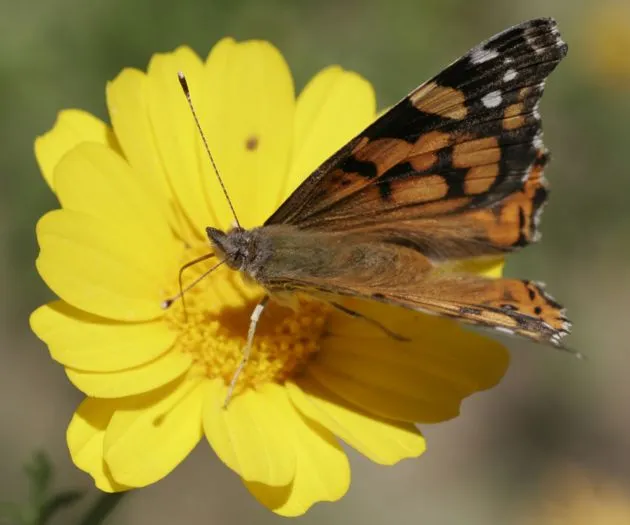
Heavy winter rains have led to billions of butterflies that are beginning to descend on California in what could be a record migration.
Millions of butterflies that flew into the Central Valley in the last week of March could be just the advance guard of an unprecedented hoard.
"This may be the biggest migration of modern times," said Arthur Shapiro, a professor and expert on butterflies at the University of California, Davis.
There are now reports of billions of painted lady butterflies around Trona, near Death Valley, and in the San Fernando Valley, Shapiro said. More waves of butterflies are likely to appear in central California over the next few weeks.
Painted lady butterflies (Vanessa cardui) winter in the desert. As caterpillars turn into adults in the spring, they migrate north in search of food and a place to mate.
Painted ladies migrate every year, but usually in far fewer numbers. Exceptionally high winter rainfall in southern California has created a bumper crop of plants on which the caterpillars feed, Shapiro said.
The butterflies take about three days to reach the Central Valley. Some will fly on to southern Oregon to mate. Their offspring head up to British Columbia by summer, before returning south again in the fall.
Get the world’s most fascinating discoveries delivered straight to your inbox.
How to identify painted ladies: They have a wingspand of 2 to 3 inches. They are orange-brown with black and white patches. Males are known to perch on shrubs and patrol during the afternoon in search of receptive females, according to the Northern Prairie Wildlife Research Center. They can live just about anywhere but prefer open or disturbed areas, including gardens, old fields, sand dunes.
- Advanced Optics ... on Butterfly Wings
- Monarch Butterfly Population Down 75 Percent
- Why Insects Swarm, and the Gory Endings of Loners
