













Open the Floodgates: Mighty Mississippi May Fight Oil Slick
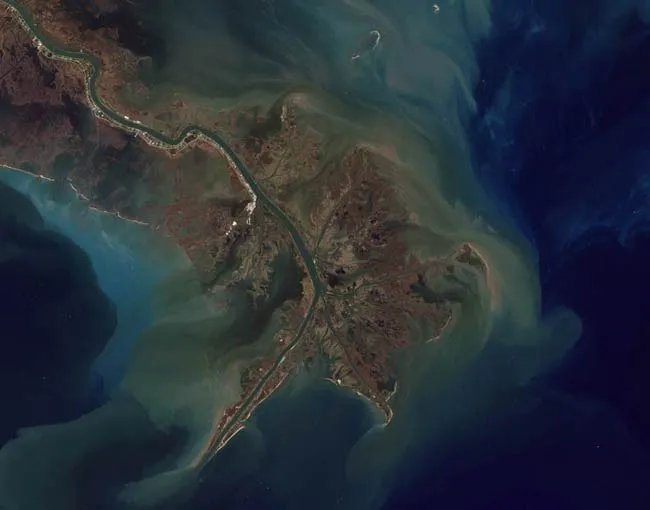
Oil has hit the fragile Gulf coast wetlands. To fight it, the mighty Mississippi River must get even mightier, scientists suggest.
The battle plan is simple: Open the floodgates on the Mississippi River leg that runs through New Orleans and the rushing water will block the BP Deepwater Horizon oil gusher from harming the delta wetlands further.
"The Mississippi River's plumbing provides a potential benefit to reducing the movement of oil onshore from shelf waters," said coastal wetlands ecologist Robert Twilley of Louisiana State University, who supports the plan.
The plan, backed by researchers at LSU and the National Audubon Society, calls for the U.S. Army Corps of Engineers to open concrete gates built within the river's levees about 315 miles (507 kilometers) upriver from the Gulf of Mexico. In theory, this would release enough water to wash away the gunk that is approaching from the Gulf. The extra flow could also flush out the oil that has reached coastal wetlands such as the Wax Lake Delta at the mouth of the Mississippi.
The Old River Control Structure, as the river's plumbing is called, routes about 70 percent of the Mississippi River through New Orleans, and 30 percent to the nearby Atchafalaya River.
The Mississippi River's stream stage, a measurement of water height above the river bed, is as high as 42 feet (13 m) near the Old River Control Structure, which is relatively high. The plan recommends shifting the water flow to send up to 81 percent of the river through New Orleans to beat back the oil.
Even if the Corps doesn't approve the plan, the river may be able to fight off some of the oil on its own.
Get the world’s most fascinating discoveries delivered straight to your inbox.
"Since the Mississippi River is currently at a relatively high stage, we expect the river's high volume of freshwater to act as a hydrologic barrier, keeping oil from moving into the Wax Lake Delta from the sea," Twilley said.
Oil has penetrated only a few yards into the wetlands and is spotty, according to an Associated Press report. The LSU researchers are documenting the health of plants and soils in the Wax Lake Delta so that they can measure the oil's impact. Twilley and colleagues are also studying how freshwater and saltwater Louisiana wetlands break down the oil.
Without oil contamination, the future was already bleak for the Gulf coast wetlands, which make up nearly 40 percent of the wetlands in the continental United States. In Louisiana alone, more than 1 million acres (4,047 square km) of coastal wetlands have disappeared over the last 75 years, and erosion washes away the equivalent of 30 football fields of wetlands every day, according to the National Audubon Society's Louisiana Coastal Initiative. With the added oil, the mouth of the Mississippi River, which is already the largest dead zone in the U.S., could get even larger.
Louisiana wetlands "play a vital role in protecting New Orleans from hurricane damage, providing habitat for wildlife, supporting economically important fisheries, and maintaining water quality," said Efi Foufoula-Georgiou of the National Center for Earth-Surface Dynamics (NCED) at the University of Minnesota. "We must look at all options for protecting them for the future."
- Gulf Oil Spill: Animals at Risk
- 7 Strange and Sad Facts About the Gulf Oil Spill
- The World's Biggest Oceans and Seas
This article was provided by OurAmazingPlanet, a sister site to LiveScience.