













Fountains of Plasma Rain Might Explain One of the Biggest Mysteries of the Sun

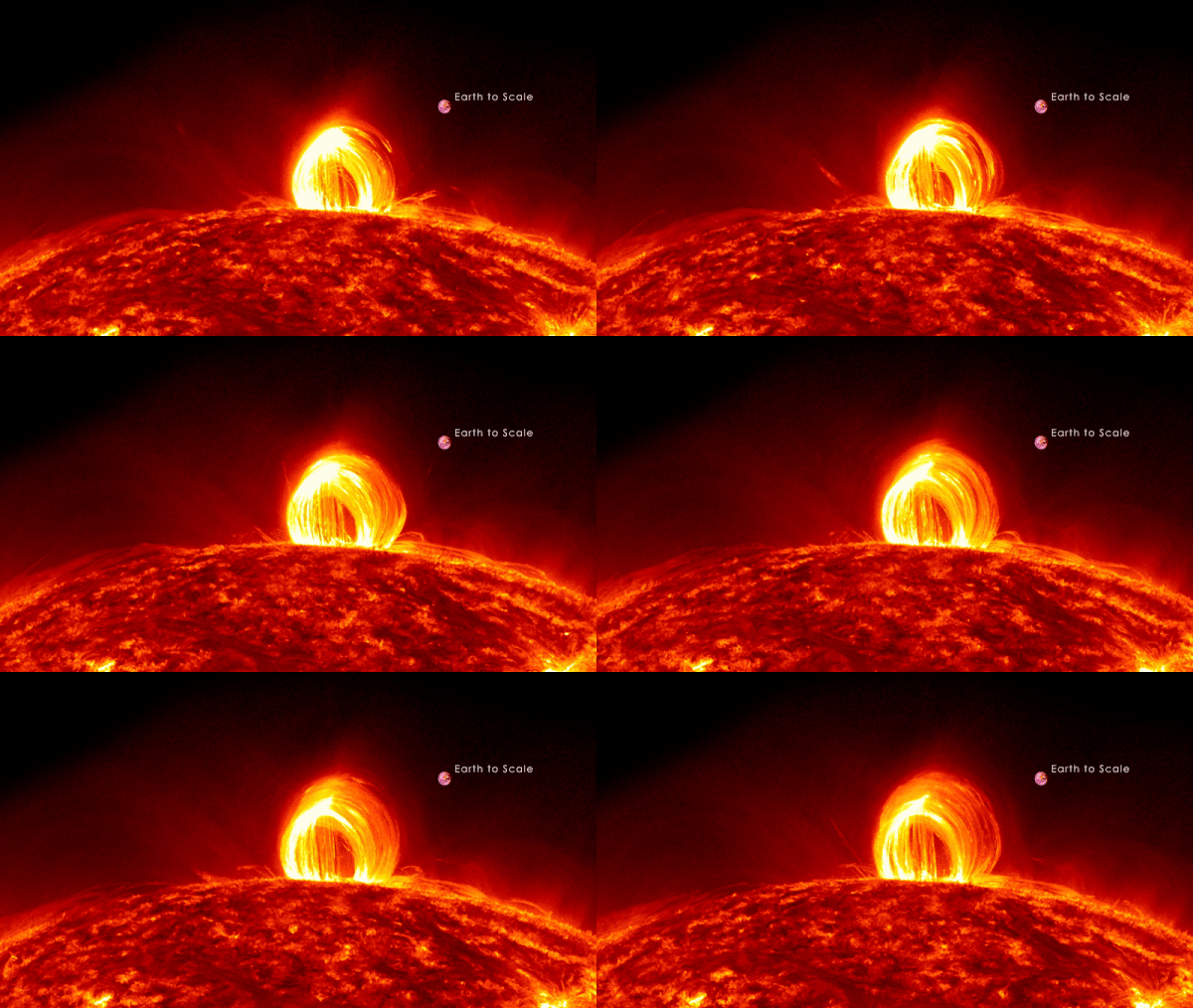
Today's weather forecast on the sun calls for a high of 10,000 degrees Fahrenheit (5,500 degrees Celsius), constant supersonic wind, mysterious eruptions of giant lava-lamp-blobs and, oh yes, light rain. So, you know, pack an umbrella.
As bizarre as it sounds, rain on the sun is a relatively common occurrence. Unlike rain on Earth, where liquid water evaporates, condenses into clouds, then falls back down in droplets after growing sufficiently heavy, solar rain results from the rapid heating and cooling of plasma (the hot, charged gas that comprises the sun).
Scientists expect to see fiery rings of plasma rain rise and fall along the sun's huge, looping magnetic field lines after the eruption of solar flares, which can heat the plasma at the sun's surface from a few thousand to nearly 2 million F (1.1 million C). Now, however, NASA scientists believe they've discovered a completely new structure on the sun that may create days-long rain storms, even without the intense heat of solar flares. [Rainbow Album: The Many Colors of the Sun]
"The ease with which these structures were identified and the frequency of rain during all observations provides compelling support for the conclusion that this is a ubiquitous phenomenon," the authors wrote in the study.
Hunting for molten rain
The detection of these drizzly structures came as a surprise to NASA researcher Emily Mason, who was scouring the SDO footage for signs of rain in massive structures called helmet streamers — 1 million-mile-tall (1.6 million km) magnetic field loops named after a knight's pointy headgear.
These streamers are clearly visible leaping out of the sun's corona, or the outermost part of its atmosphere, during solar eclipses, and seemed as good a place as any to look for solar rain, the researchers wrote. However, Mason couldn't find a trace of falling plasma in any SDO footage of the streamers. What she did see were numerous bright, low, mysterious structures that she and her team later identified as the RNTPs.
The relatively low altitude of the structures may be the most interesting aspect of the results, the researchers wrote. Reaching a maximum of 30,000 miles (50,000 km) over the sun's surface, the RNTPs were only about 2% as tall as the helmet streamers Mason and her team were looking at. That means that whatever process was causing the plasma to heat up and rise along the magnetic field lines was occurring in a much narrower region of the sun’s atmosphere than previously thought.
Get the world’s most fascinating discoveries delivered straight to your inbox.
That means the processes that drive these ubiquitous fountains could help explain one of the enduring mysteries of the sun — why is the sun's atmosphere nearly 300 times hotter than its surface?
"We still don't know exactly what’s heating the corona, but we know it has to happen in this layer," Mason said in a statement.
- 15 Unforgettable Images of Stars
- The 12 Strangest Objects in the Universe
- 9 Scientific Excuses for Why We Haven't Found Aliens Yet
Originally published on Live Science.

Brandon is the space / physics editor at Live Science. With more than 20 years of editorial experience, his writing has appeared in The Washington Post, Reader's Digest, CBS.com, the Richard Dawkins Foundation website and other outlets. He holds a bachelor's degree in creative writing from the University of Arizona, with minors in journalism and media arts. His interests include black holes, asteroids and comets, and the search for extraterrestrial life.