













5,600-Year-Old Human Skull Bone Fished Out of the Thames by Lucky 'Mudlarker'

Humans have lived alongside England's River Thames for thousands of years, and they've left some interesting things behind in its muddy waters: wooden clubs for bashing in heads, a toilet that fits three butts at once and sometimes, even bits of human skulls.
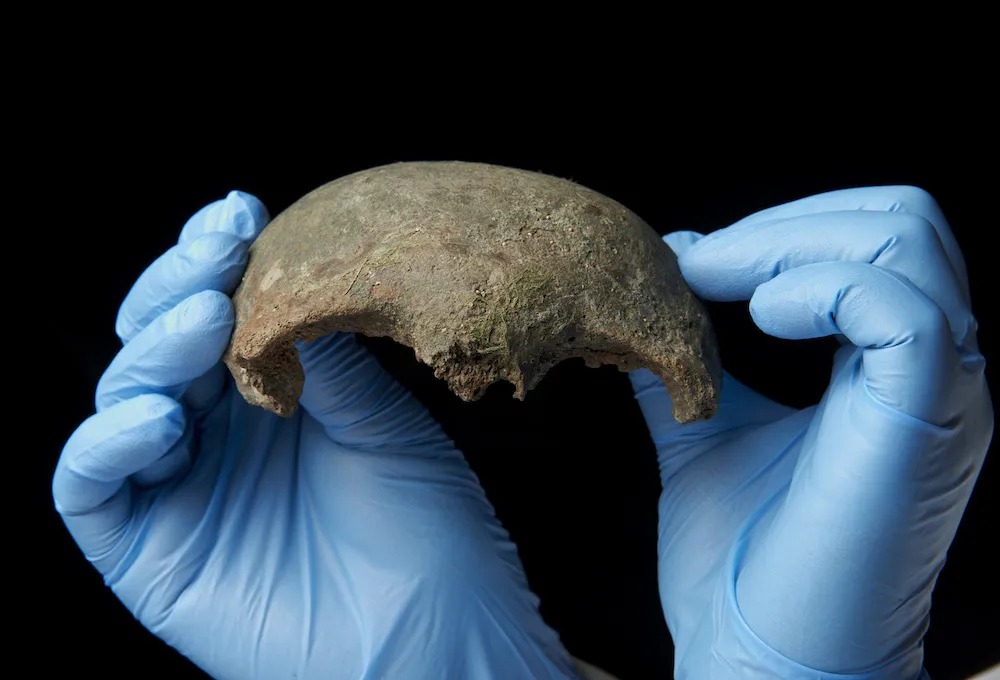
Tomorrow (Feb. 20), the Museum of London will put one such skull fragment on display. According to a statement from the museum, the fractured frontal skull bone belonged to an adult man who lived sometime around 3600 B.C., making this Neolithic skull chunk one of the oldest human specimens ever pulled out of the Thames. [13 Bizarre Things That Washed Up on Beaches]
According to the museum, the specimen was initially discovered near the southern shores of the Thames by a "mudlarker" — a person who digs through the river mud in search of valuables. (Mudlarkers have made scavenging the Thames their business for hundreds of years; in fact, the 500-year-old skeleton of a dead mudlarker wearing thigh-high leather boots was recently exhumed from the river.)
Excited — or perhaps terrified — by the shattered chunk of human cranium he found by the river, the lucky mudlarker did what any of us would have done: He promptly called the police.
"Upon reports of a human skull fragment having been found along the Thames foreshore, Detectives from South West CID [criminal investigation department] attended the scene," detective Matt Morse at the London Metropolitan Police said in the statement. "Not knowing how old this fragment was, a full and thorough investigation took place, including further, detailed searches of the foreshore."
For better or worse, the police didn't turn up any more bones. Using radiocarbon dating, which measures levels of different versions of radioactive carbon atoms, they at least learned that the fragment wasn't involved in any recent criminal activity — the skull bone came from a male over the age of 18 who lived roughly 5,600 years ago.
Starting tomorrow, you can see the bone for yourself at the Museum of London, where it will sit alongside other Neolithic artifacts carried through time by the mad, muddy River Thames.
Get the world’s most fascinating discoveries delivered straight to your inbox.
- In Images: Deformed Skulls and Stone Age Tombs from France
- Images: Thousands of Skeletons Buried Under Central London
- In Images: Skulls of Roman Gladiators and War Captives
Originally published on Live Science.

Brandon is the space / physics editor at Live Science. With more than 20 years of editorial experience, his writing has appeared in The Washington Post, Reader's Digest, CBS.com, the Richard Dawkins Foundation website and other outlets. He holds a bachelor's degree in creative writing from the University of Arizona, with minors in journalism and media arts. His interests include black holes, asteroids and comets, and the search for extraterrestrial life.