













Was The Queen's Twitter Hacked, or Does She Just Really Like Mushrooms?

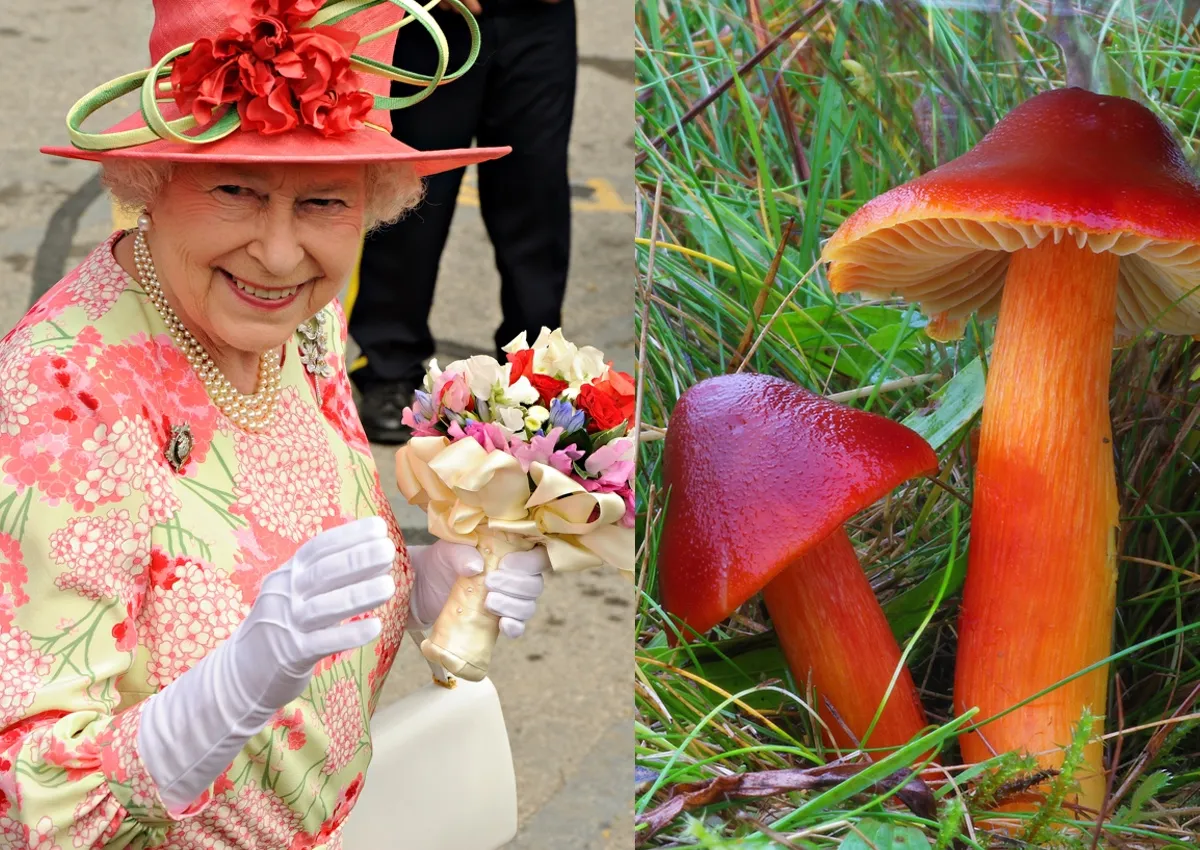
Has Her Royal Highness been hacked? Or is she just a closet mushroom enthusiast?
Fans and followers of the English royal family wondered these things recently when the family's official twitter account began posing philosophical, borderline-trippy questions about fungi, the English alphabet and pipes filled with various amounts of liquid. Questions like this:
And this:
Some fans among the account's 3.8 million followers asked whether Her Majesty's Twitter had been hacked. Others proposed alternative hypotheses: Maybe the account's steward "let Prince Phillip handle the Twitter account," or perhaps someone had simply been "eating those funny smelling cookies Harry baked," two loyal subjects suggested.
Fortunately, Britain's royal family has not been hacked and, as far as we can tell, Harry is keeping his cookies to himself. The real explanation for the non-sequitur tweets is, simply, people were reading them out of context and out of order.
The questions aren't the queen's private musings, but actually date to a University of London exam administered in 1869. That was the year that the university admitted its first female students — nine "pioneering women," the royal family tweeted — and these questions about fungi and alphabets were among the questions they were asked on a "special exam" written just for them.
The year 2019 marks the 150th anniversary of women being allowed in higher education in England, thanks to a Royal Charter given to the University of London by Queen Victoria. The university and members of the royal family celebrated the college's history of female scholarship with a special reception on Jan. 30, attended by female scholars from around the world.
Get the world’s most fascinating discoveries delivered straight to your inbox.
"Education has never been more relevant or necessary to advance knowledge, and I am delighted to celebrate the role that women have played in that advancement over the last 150 years," Princess Anne (also the chancellor of the University of London) said at the reception.
There you have it. Oh, and in case you're still dying to know the answer to that mushroom question (Your Highness), it's this: Fungi don't photosynthesize.
- Nature Under Glass: Gallery of Victorian Microscope Slides
- 11 Odd Facts About 'Magic' Mushrooms
- 30 of The World's Most Valuable Treasures That Are Still Missing
Originally published on Live Science.

Brandon is the space / physics editor at Live Science. With more than 20 years of editorial experience, his writing has appeared in The Washington Post, Reader's Digest, CBS.com, the Richard Dawkins Foundation website and other outlets. He holds a bachelor's degree in creative writing from the University of Arizona, with minors in journalism and media arts. His interests include black holes, asteroids and comets, and the search for extraterrestrial life.