













Possible Path to Humans for Avian Flu Found

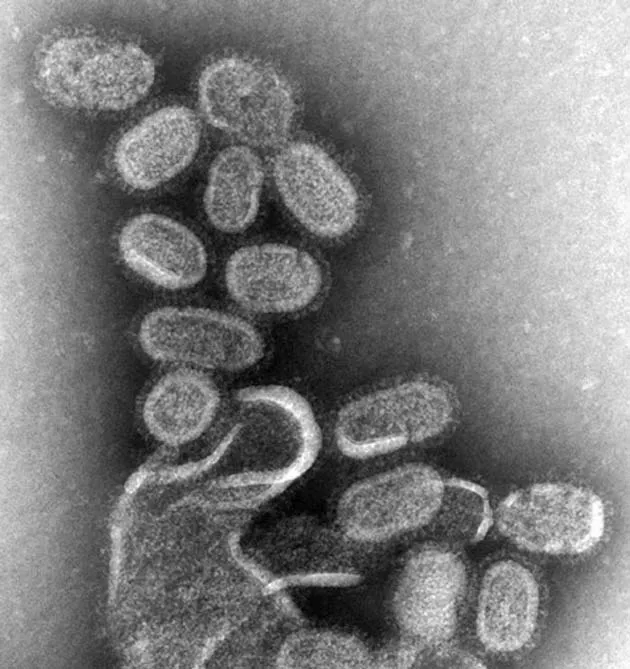
New mutations in parts of the avian flu virus might provide a possible route for the virus to enter the human population. But scientists cautioned there was no cause for alarm.
Looking at a sample of the H5N1 virus isolated from a Vietnamese boy who died from the bird flu in 2004, researchers found a type of mutation that could provide a possible "foothold" for the virus in the human population.
The findings are detailed in the March 16 issue of the journal Science.
The H5N1 strain of the flu virus is, for the moment, specific to birds and not humans. However, much like the deadly 1918 Spanish flu, H5N1 could cross species, infect many and potentially reach pandemic proportions.
In order for the virus to jump from birds to humans, the protein on the virus has to change so that it can bind itself to human cells and find a new home.
Scripps Research Institute researcher Ian Wilson and colleagues wondered: If they put two mutations onto the H5N1 virus similar to the 1918 version, could it enter humans? It could not.
Wilson and colleagues then imposed the mutations that likely happened to the 1968, Hong Kong flu strain onto the current avian flu virus.
Get the world’s most fascinating discoveries delivered straight to your inbox.
"We got some binding to the human lung cell, but it wasn't dramatic," Wilson told LiveScience.
This suggests a possible route for the virus to enter human cells. But scientists advise that the news is not all that grim.
"If it happens, it's something to be concerned about. But, there has not been any changes like it yet, and hasn't been for several years," Wilson said.
The Avian Flu Spread
- Bird Flu Jumps to Cat in Germany
- New Bird Flu Concerns Italy, France, Egypt, India
- Tests Find Bird Flu in Egypt, France
- Bird Flu Reaches Western Europe
- Avian Flu Reaches Africa
U.S. Worries
- Bird Migration Has U.S. Experts Watching For Flu
- U.S. Not Prepared for Flu Pandemic
- Deadly Flu Will Reach U.S., Says Bird Migration Expert
- Bird Flu Pandemic Imminent, Health Official Says
- Avian Flu Could Reach U.S. Next Year
Flu Science
- SPECIAL REPORT: FLU FEARS
- Insides of Flu Virus Revealed
- Amid Avian Flu Fears, Other Bugs Far More Deadly
- Trojan Ducks: One More Possible Flu Carrier
- Scientists Recreate 1918 Flu Virus From Scratch
SPECIAL REPORT: FLU FEARS
What it is and how it affects us.
How to prevent and treat the flu.
How flu could become a global killer.
