













A Speck of Weapons-Grade Plutonium Is Missing in Idaho

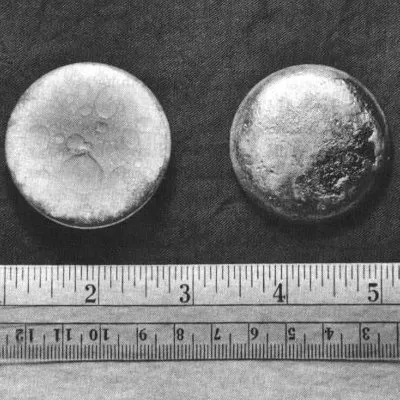
Today in jeepers: There's a speck of weapons-grade plutonium missing in Idaho.
According to a Nuclear Regulatory Commission (NRC) statement, 1 gram (0.04 ounces) of plutonium-239 — about the weight of a paper clip — disappeared from Idaho State University. It last turned up in the university's records in 2004, along with 13 other gram-size pieces of plutonium that are still accounted for.
Victor Dricks, an NRC spokesperson, said that university staff identified a problem with the now-missing speck of plutonium in 2004, so they triple-bagged it in clearly marked protective covers and set it aside for disposal. At that point, the university deleted its record of the plutonium from a database of nuclear materials that it's required to maintain for the NRC, without recording where it went. [5 Everyday Things That Are Radioactive]
It took until October 2017 for a university worker to notice that it was gone, according to a letter the NRC sent to Idaho State.
There doesn't seem to be much reason to worry about this material being turned into a weapon or otherwise posing a danger to the public, though.
"We suspect that it ended up in a landfill for radioactive materials," Dricks told Live Science.
Dricks said he can't confirm that the missing plutonium poses absolutely no threat of exposure to the public, but he suggested that the issue was likely one of poor record keeping, rather than physically dropping the material somewhere it shouldn't go.
Get the world’s most fascinating discoveries delivered straight to your inbox.
According to the Associated Press, a single gram of plutonium-239 isn't enough to make a nuclear bomb — though it could form the radioactive basis of a dirty bomb in a pinch.
If plutonium-239 were to end up in the hands of someone wishing to do violence, though, that would represent a major coup. Plutonium, as Live Science has previously reported, doesn't occur naturally on Earth; it must be made in nuclear reactors by bombarding uranium with radioactive particles.
In other words, typically only nuclear-powered governments get to use plutonium-239 for violence.
The plutonium core of the "Fat Man" bomb that the U.S. dropped on Nagasaki, Japan, on Aug. 9, 1945, was made this way, but it involved a soft ball-size, 13.6-lb. (6.2 kilograms) hunk of plutonium — about 6,200 times the mass of the 1-gram missing piece.
Idaho State will pay an $8,500 fine to the NRC for the error, and Dricks said the university will turn over its 13 other plutonium sources while it conducts a review of its protocols.
Editor's note: This story has been updated to correct a unit conversion error.
Originally published on Live Science.
