













We Were Totally Wrong About That Scott Kelly Space Genes Story
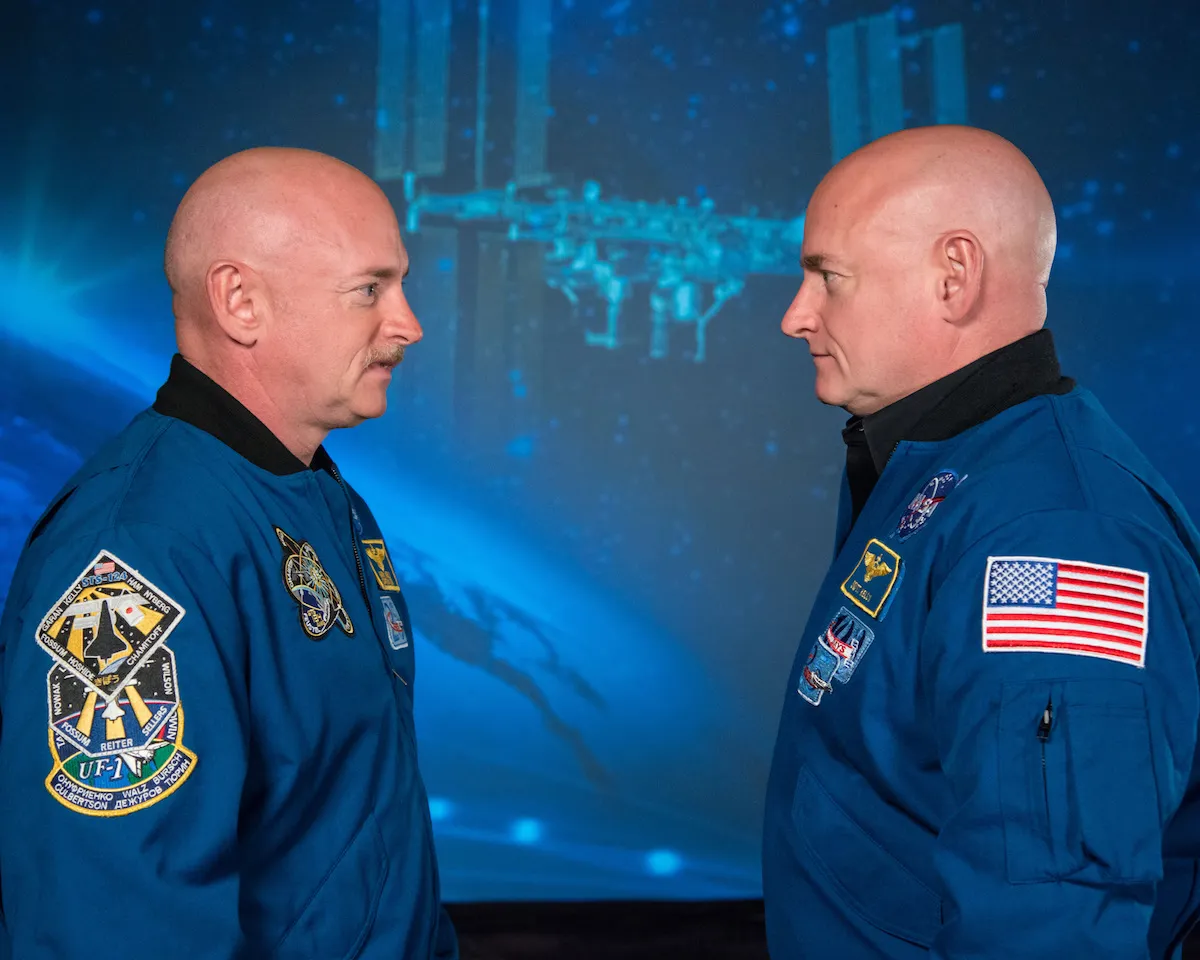
On Monday (March 12), we published a story about astronaut Scott Kelly returning after a year in space with big changes to his genetic code, so much so that he was no longer his brother's identical twin.
It turns out we got the story wrong in a big way. In the original story, we reported that 7 percent of Kelly's genetic code had changed after his stint in space. But that enormous level of genetic change would mean Kelly went to outer space and came back a space alien: All humans share more than 99 percent of our DNA, and we share more than 98 percent of our DNA with chimpanzees, our closest living relatives.
That divergence in chimp versus human DNA comes from roughly 40 million mutations in the base-pairs, or letters, that make up the genetic code, Live Science previously reported. By contrast, in a press release from NASA, researchers reported hundreds of unique mutations in the DNA of both Scott and Mark Kelly (his identical twin brother). That's more than would be expected, but nowhere near enough to make the duo "no longer identical twins." In reality, identical twins that are both Earth-bound would also rack up mutations over the course of their lives; identical twins ordinarily don't have perfectly identical genomes.
So what really happened to Mark and Scott Kelly? It turns out that big changes in the expression of Scott Kelly's genes occurred while he was in space, and 7 percent of those changes persisted after he returned to Earth, lead author Susan Bailey, a researcher at Colorado State University, who led the research on Kelly, told Nat Geo's Nadia Drake. What that means is that his body quieted some of his genes while amplifying others, so that his body produced more or less of certain key proteins in an attempt to adjust to the weird conditions of space and microgravity — not, as our original story claimed, that his DNA actually changed.
Live Science regrets the error, and we hope you don't launch us into space.
Originally published on Live Science.
Get the world’s most fascinating discoveries delivered straight to your inbox.