













Back From the Dead: Living Fossil Identified
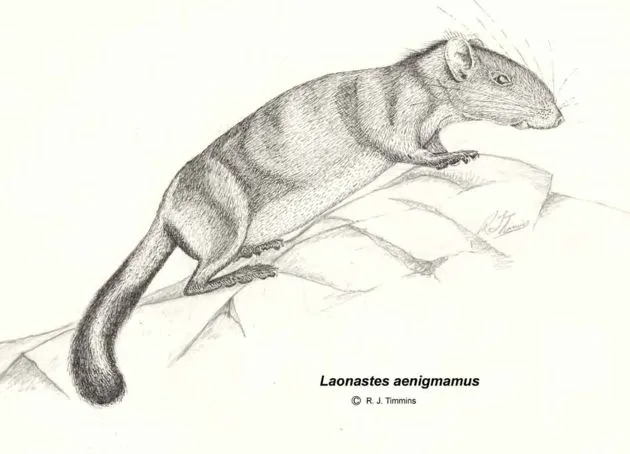
A few months after researchers on one team thought they had discovered a new family of rodent, another group snatched their glory by identifying the critter as a member of a family thought long extinct.
Last year scientists described the body of a squirrel-like rodent found for sale in a meat market in Laos. They believed it belonged to a previously undescribed family and named it Laonastes aenigmamus.
But they failed to fully inspect the fossil record. Upon closer analysis of the creature's teeth, a second group of researchers determined it was a member of the previously known rodent family Diatomyidae.
So a family thought to have died out 11 million years ago is still alive and kicking, the scientists report in the March 10 issue of the journal Science.
Back from the dead
The discovery is an example of what scientists call the "Lazarus effect," a situation when an animal known only through the fossil record is found living.
Perhaps the best known example of the Lazarus effect is the coelacanth, a lobe-finned fish discovered off the coast of South Africa that scientists thought died out at least 65 million years ago.
Get the world’s most fascinating discoveries delivered straight to your inbox.
Most examples of the Lazarus effect in mammals, though, only go back 10,000 years or so.
"It is an amazing discovery and it's the coelacanth of rodents," said study coauthor Mary Dawson of the Carnegie Museum of Natural History. "It's the first time in the study of mammals that scientists have found a living fossil of a group that's thought to be extinct for roughly 11 million years. That's quite a gap. Previous mammals had a gap of only a few thousand to just over a million years."
Laonastes is currently in the process of being officially reclassified in the Diatomyidae family.
Teeth truth
Diatomyidae were squirrel-sized rodents that lived during the middle Tertiary period 34 million to 11 million years ago in southern Asia, central China, and Japan. They also had highly characteristic molar teeth and jaw structure, which is how the researchers reclassified Laonastes.
A recently discovered fossil of Laonastes matched the "living" specimen in skull shape and overall size. The only difference is that the "living" specimen's teeth are slightly more pointed.
"It looks like possibly one of the things that's been changing in family is improved cutting of vegetation," Dawson told LiveScience. "But over 11 million years you'd expect some differences in the structures."
Western scientists still haven't seen a living Laonastes specimen, which will be critical in conserving what may be a threatened species.
"Biologists need to get out there and find some living ones," Dawson said.
Finding living specimens and understanding how they live could be key to determining why the rodents moved from central Asia into the Indian subcontinent.
- The Ugliest Animals
- Student Finds New Species of Amphibian
- Researchers Identify New Species of Macaque
- Top 10 Deadliest Animals