















Antarctic Microbes Can Survive on Air Alone

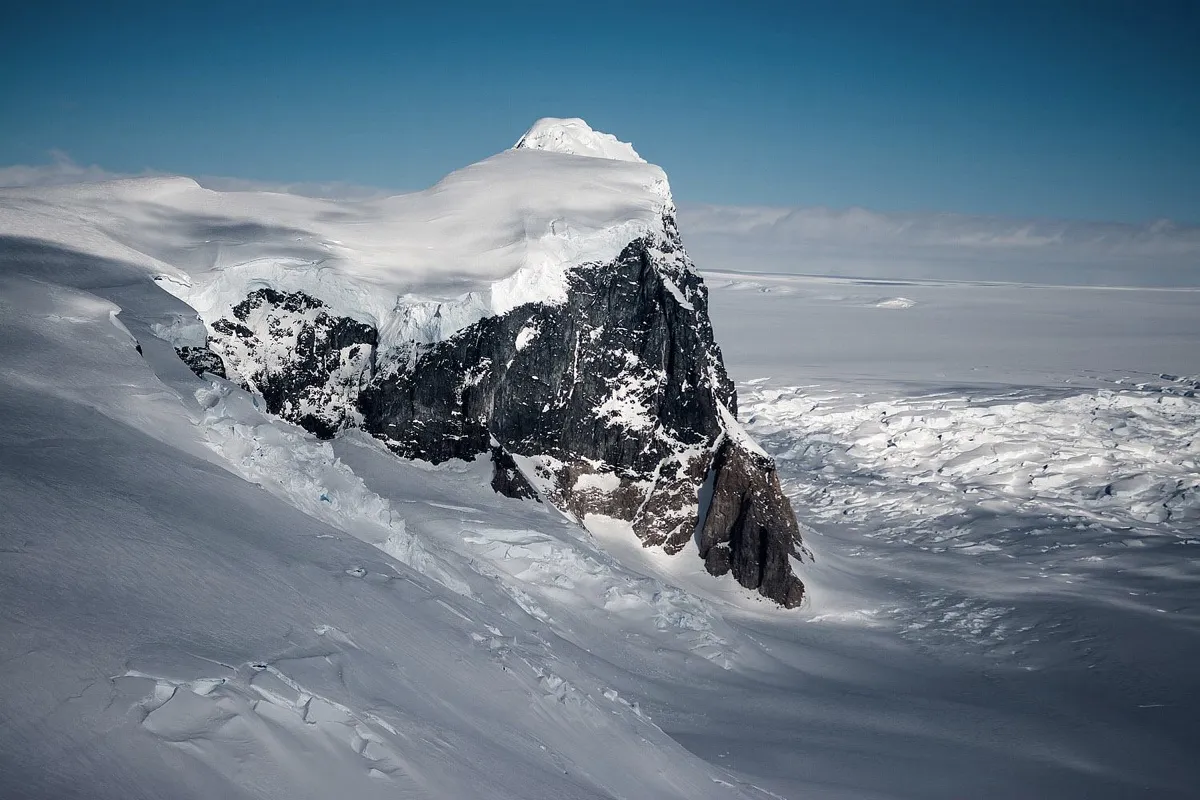
Talk about an extreme diet. Antarctic microbes are capable of surviving on air, according to a new study published in the journal Nature.
Soil microbes that live in polar deserts must contend with extremely dry conditions, nutrient-poor dirt and 24-hour darkness for half the year. Now, a genetic study of some of these microscopic survivors reveals that they pull it off by gleaning trace gases right out of thin air.
"This new understanding about how life can still exist in physically extreme and nutrient-starved environments like Antarctica opens up the possibility of atmospheric gases supporting life on other planets," study leader Belinda Ferrari, a microbiologist at the University of New South Wales in Australia, said in a statement.
Life on the outer limit
The researchers collected soil microbes from two regions in eastern Antarctica, both of which are ice-free and devoid of vegetation. The soil is also very low in vital nutrients like carbon and nitrogen. The first sample area was a spot called Robinson Ridge in Wilkes Land. The second was a desolate stretch called Adams Flat in Princess Elizabeth Land.
The team was able to scan the genomes of 23 separate microbes, including two bacterial groups never before described by science, dubbed WPS-2 and AD3. The most dominant microbes, the scientists found, were also those with the genes that leant them air-scrubbing abilities. [Extreme Life on Earth: 8 Bizarre Species]
"They can get most of the energy and carbon they need by scavenging trace atmospheric gases, including hydrogen and carbon monoxide," Ferrari said. They can also pull carbon dioxide from the air, the researchers reported.
Slow living
This method of feeding on air may be prevalent throughout Antarctica, the researchers wrote, though they said more sampling is needed to find out whether that's the case. Microbes in other nutrient-poor spots, like the Atacama Desert in South America — the driest desert in the world — could use atmospheric gases to survive, too, the researchers wrote.
Get the world’s most fascinating discoveries delivered straight to your inbox.
Bacteria have been known to survive on carbon monoxide and hydrogen alone, Don Cowan and Thulani Makhalanyane of the University of Pretoria, South Africa, wrote in a News and Views article accompanying Ferrari's paper. Usually, microbes live like this in oxygen-free environments like the sediments in the deep sea, but some bacteria, like Geobacter sulfurreducens, are known to pull carbon monoxide from the air as their energy source, added Cowan and Makhalanyane, who weren't involved in the original study.
The Antarctic bacteria spend most of the year dormant, Cowan and Makhalanyane noted, actively eating, growing and reproducing for likely only a few hundred hours annually. That means life moves at a slow pace for these organisms, the authors wrote. But the find is still exciting, Cowan and Makhalanyane added, especially for astrobiologists.
"It adds another dimension to our understanding of the survival and energy-sufficiency mechanisms of organisms living in places at the limits of where life is thought to be possible," the authors wrote.
Original article on Live Science.

Stephanie Pappas is a contributing writer for Live Science, covering topics ranging from geoscience to archaeology to the human brain and behavior. She was previously a senior writer for Live Science but is now a freelancer based in Denver, Colorado, and regularly contributes to Scientific American and The Monitor, the monthly magazine of the American Psychological Association. Stephanie received a bachelor's degree in psychology from the University of South Carolina and a graduate certificate in science communication from the University of California, Santa Cruz.