













Birds Favor Most Promising Offspring
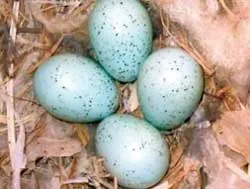
Parasites can lessen a young bird’s chance of survival. If parents can detect signs of infection early, they may cut their losses by reducing their efforts to feed and care for parasitized broods—thus saving energy for healthy offspring or future breeding attempts.
A new study suggests that such parental vetting begins even before eggs hatch.
Nests of spotless starlings, Sturnus unicolor, are often infested with bloodsucking Carnus hemapterus flies. The flies’ feces stain the birds’ bluish-green eggs with brown spots; the more spots, the greater the risk the baby birds will be parasitized once they hatch.
Curious whether spotless starling parents gauge the parasite load of their future offspring from the eggs’ spottiness and adjust their care accordingly, Jesús Miguel Avilés, now at the Spanish National Research Council’s research station in Almería, studied a colony breeding in nest boxes. He and three colleagues first ascertained that as a nest’s fly population increases, nestling weight—a reliable predictor of survival to adulthood—decreases. Then, using wet cotton, they cleaned the spots off eggs in some nest boxes, but not others.
Once the eggs hatched, they found that broods from experimentally cleaned eggs received more parental visits than broods from naturally spotty ones. But, intriguingly, only males gave them extra attention, not females. Unlike females, males can sire several broods at a time; perhaps their attention to egg spottiness evolved because it enabled them to dote on the most promising nestful of offspring.
The research was detailed in the journal Animal Behaviour.
This article was provided to Live Science by Natural History Magazine.
Get the world’s most fascinating discoveries delivered straight to your inbox.