















People with synesthesia experience the sensory world in a unique way — for example, they "taste" words or "hear" colors. Now, new research suggests that people who learn a second language but aren't exposed to that second language very early in life are more likely to have this sensory-switching ability than those who are natively bilingual.
"Groups of people with different linguistic backgrounds have different rates of synesthesia — and quite different rates," said study co-author Marcus Watson, an experimental psychologist at York University in Toronto. "It ranges from 0 percent to about 5 percent depending on what their language background is."
The findings bolster a theory that synesthesia — the bizarre brain phenomenon in which one sensory or cognitive experience is automatically triggered by another — may develop to improve learning in complicated, ruled-based tasks such as mastering reading, music theory and time telling. [Spooky! The Top 10 Unexplained Phenomena]
Sensory mash-up
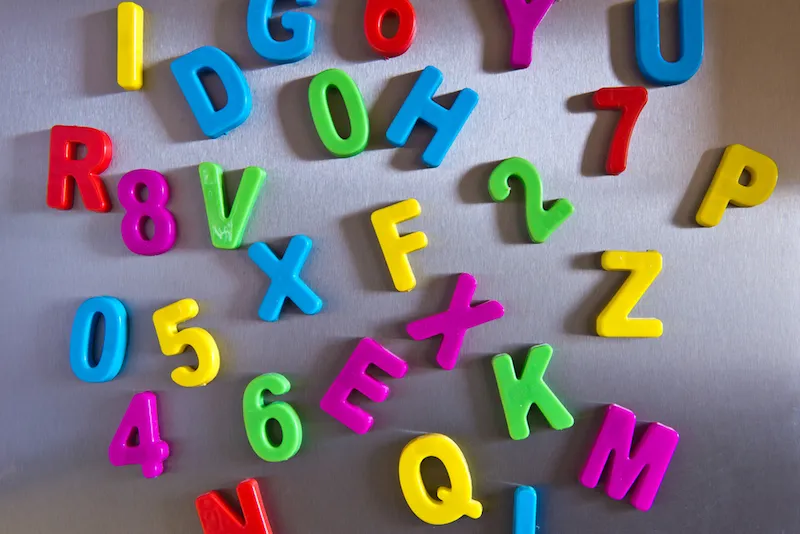
People with synesthesia have mixed sensory experiences; for instance, they may see certain colors pop out when listening to music, or see letters in specified colors (such as always seeing the letter "A" as red). Past studies have shown that anywhere between 1 and 5 percent of people exhibit the phenomenon, and that genetic factors may make the condition more likely. But most people with the associated genetics do not exhibit the trait, so why, exactly, does it occur?
One theory holds that synesthesia develops as a learning aid. For instance, when kindergartners begin tackling phonics, mapping letters to specific colors could help them differentiate between similar-looking letters, such as an "R" and a "P." Similarly, seeing color in music could aid in tone differentiation.
Supporting this theory, scientists have found that children master the categorization of colors between ages 4 and 7, right around the time they begin learning to read and write. Letter-color synesthesia, meanwhile, develops during an overlapping period, between ages 6 and 11, a 2012 study in the journal Consciousness and Cognition showed. Scientists also have shown that synesthesia helps children memorize, categorize and understand certain kinds of grammar, Watson and his colleagues wrote in the paper, which is published in the February issue of the journal Consciousness and Cognition.
Varied language background
If synesthesia is a mental aid for complex learning, then people with different language backgrounds should have different rates of synesthesia, the researchers hypothesized. Their working theory was that children who grew up hearing and speaking two languages from a very young age would have higher rates of synesthesia than those who either did not learn a second language or learned one later in life. [Your Color Red Could Be My Blue]
Get the world’s most fascinating discoveries delivered straight to your inbox.
To test their hypothesis, the researchers surveyed more than 11,000 students at two universities: one in Prague, and another in British Columbia. Survey respondents were asked whether they had one of six common forms of synesthesia, if and when they learned second or additional languages beyond their native tongue, whether they had difficulties learning to read or write, and whether they were left- or right-handed. The participants were also given a follow-up test to confirm their synesthesia.
Overall, about 4.4 percent of the Czechs surveyed and 2.7 percent of the Canadians surveyed had some form of synesthesia. Many of the people who said they did not have synesthesia actually did, the researchers found in the follow-up test.
And people in both groups who learned a second language after they reached school age were much more likely to have synesthesia than those who learned two languages from an early age.
"The Czechs were all non-native multilinguals," Watson told Live Science. "They would learn second, third, fourth, fifth, even sixth languages, but they would learn them late, starting in grade two or three."
By contrast, the Canadian students spoke fewer languages overall but were much more likely to be non-native English speakers or to have grown up speaking two or more languages. [10 Things You Didn't Know About the Brain]
Opaque languages
Interestingly, the type of language people acquired as their first, second or third language also correlated with the rates of synesthesia. The team classified languages as either "transparent" or "opaque." Czech, for example, is a transparent language, meaning each letter can make just one sound, and very few letters make the same sound.
By contrast, English is an opaque language — a hot mess of weird rules, exceptions, and exceptions to the exceptions and, as a result, is typically much harder to learn. It turned out that people who spoke only one language but who spoke an opaque language, such as English, were much likelier to exhibit synesthesia compared with people who spoke just transparent languages. That finding bolsters the notion that synesthesia develops, or at least persists, because it helps people make sense of the jumble of confusing and complicated rules involved in certain types of learning tasks, the researchers said.
The fact that native bilingual children are less likely to develop synesthesia may also bolster the researchers' learning hypothesis, they wrote in the study. It's easier to learn two languages early in life than it is to pick up a second one later, Watson said. As such, the brains of native bilingual speakers may not need the learning aid of synesthesia, he speculated.
The new study has "pushed some neat ideas" but is still speculative, said David Brang, a cognitive neuroscientist at the University of Michigan who also studies synesthesia but was not involved in the research.
It's notoriously hard to pin down who truly experiences synesthesia; many people who say they have synesthesia may fail the official tests for the phenomenon. For instance, one person Brang has studied for years strongly associates certain colors with certain letters and shows dramatic brain activity associated with synesthesia, but "every morning when he wakes up, his P's and Q's might have switched color," Brang said.
On the flip side, many people experience synesthesia but, on surveys, say they don't, Brang said. So teasing apart differences in prevalence tied to language learning, versus other cultural factors, is especially tricky, he said.
In addition, the findings would run counter to an alternate theory with some experimental backing, called the neuronal recycling hypothesis, Brang said. Past work has shown that people process faces and language in neighboring areas of the brain region called the fusiform gyrus.
"If you take people who haven't learned language, they tend to show increased face processing," but that goes away as they learn language, Brang told Live Science. "As they learn language early in development, they're stealing resources from face processing."
According to that theory, then, synesthesia would make it more difficult to learn languages, because mapping colors onto sounds would take away extra "CPU" time from the brain region needed to learn the rules for spelling, for instance, Brang said.
Originally published on Live Science.

Tia is the editor-in-chief (premium) and was formerly managing editor and senior writer for Live Science. Her work has appeared in Scientific American, Wired.com, Science News and other outlets. She holds a master's degree in bioengineering from the University of Washington, a graduate certificate in science writing from UC Santa Cruz and a bachelor's degree in mechanical engineering from the University of Texas at Austin. Tia was part of a team at the Milwaukee Journal Sentinel that published the Empty Cradles series on preterm births, which won multiple awards, including the 2012 Casey Medal for Meritorious Journalism.