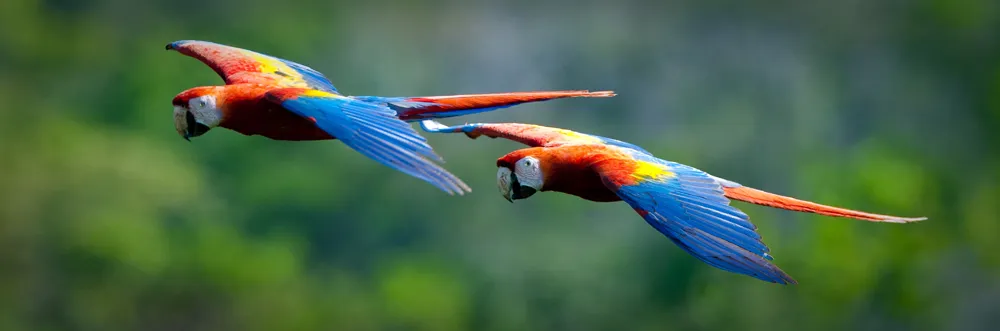
There are only about 300 wild scarlet macaws (Ara macao cyanoptera) left in Guatemala, all of which nest in an area of the Maya Biosphere reserve that is extremely vulnerable to forest fires. (Credit: Chris Packham/WCSGuatemala.)
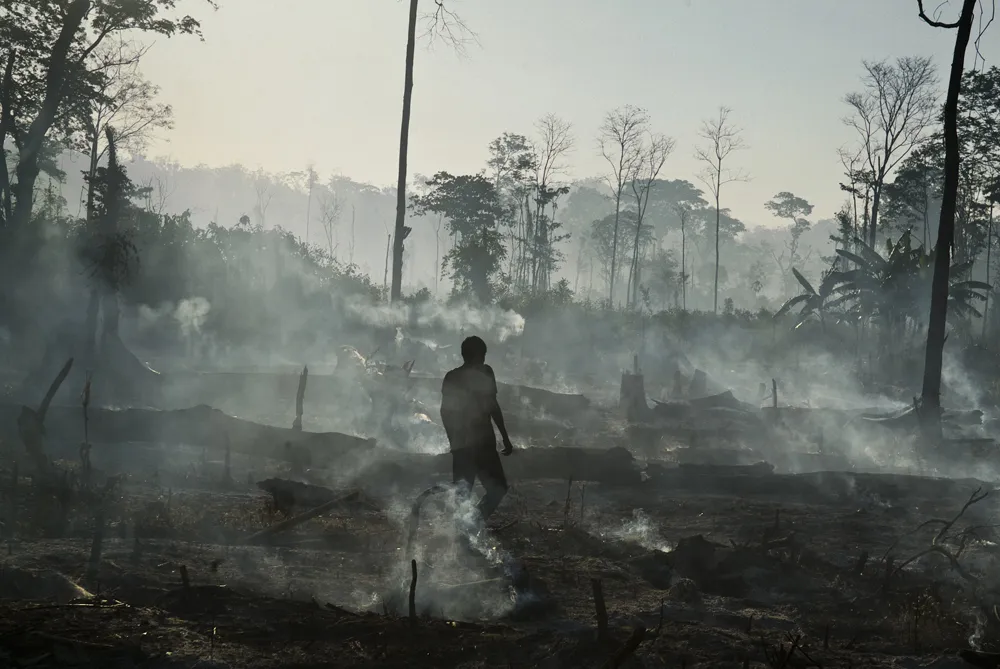
Field afire
Wildfires burn rampantly in Guatemala's Laguna del Tigre national park in May, 2009. (Credit: Ben Schilling/WCS Guatemala with the support of LightHawk.)
Forced out
Sign up for the Live Science daily newsletter now
Get the world’s most fascinating discoveries delivered straight to your inbox.
A jaguar (Panthera onca) captured by automatic cameras set up by the Wildlife Conservation Society to evaluate the health and size of the remaining jaguar population in Guatemala's Maya Biosphere reserve. (Credit: Rony Garcia/WCS Guatemala.)
A protected piece of land
Guatemala’s Maya Biosphere reserve is one of Central America’s largest and most spectacular protected areas. (Credit: Roan McNab/WCS Guatemala with the support of LightHawk.)
The Baird's tapir (Tapirus bairdii), like this one in Guatemala's Laguna del Tigre national park, is Central America's largest land mammal, and depends intimately upon surface water for survival. (Credit: Roan McNab/WCS Guatemala.)
Extreme risks
Entire bodies of water in Guatemala's Maya Biosphere reserve dry out during extreme climatic events, putting wildlife and forest communities at risk. (Credit: Roan McNab/WCS Guatemala with the support of LightHawk.)
Soaring above it all
Macaws in flight. (Credit: Chris Packham/WCSGuatemala.)
Follow all of the Expert Voices issues and debates — and become part of the discussion — on Facebook, Twitter and Google+. The views expressed are those of the author and do not necessarily reflect the views of the publisher. This version of the article was originally published on Live Science.
For the science geek in everyone, Live Science offers a fascinating window into the natural and technological world, delivering comprehensive and compelling news and analysis on everything from dinosaur discoveries, archaeological finds and amazing animals to health, innovation and wearable technology. We aim to empower and inspire our readers with the tools needed to understand the world and appreciate its everyday awe.