Volcanoes May Explain Delay in Earth's Oxygen

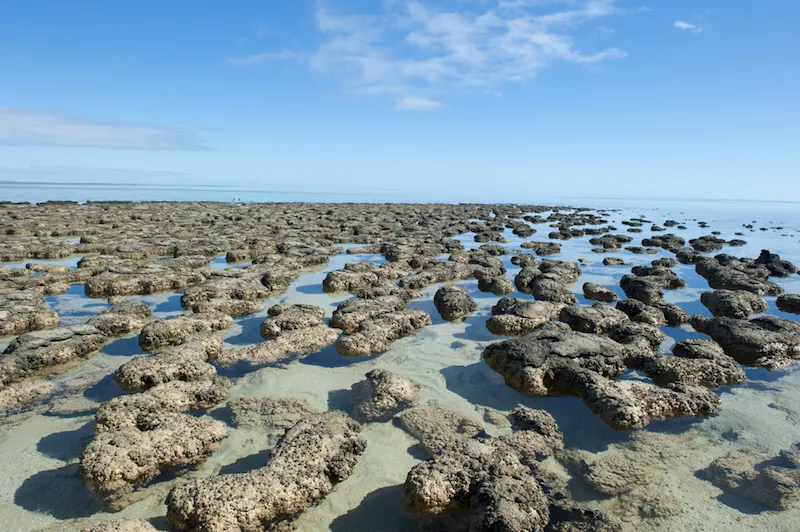
Underwater volcanic eruptions may have delayed oxygen from building up in the atmosphere of primeval Earth for hundreds of millions of years, researchers say.
The finding sheds light on how Earth became the oxygenated world it is today, scientists added.
"Our research shows how the high concentrations of iron in the Earth's past could have limited photosynthesis," said lead study author Elizabeth Swanner, a geomicrobiologist at the University of Tübingen in Germany. Photosynthesis is the process by which plants and other organisms turn sunlight into sugar, and it produces oxygen as a byproduct.
Although life-sustaining oxygen gas currently makes up about a fifth of the Earth's air, very early in the planet's history, oxygen was rare in the atmosphere. The first time the element suffused Earth's primordial atmosphere to any great extent was about 2.3 billion years ago in what is called the Great Oxidation Event. Prior research suggests this jump in oxygen levels was almost certainly due to cyanobacteria — microbes that, like plants, photosynthesize and produce oxygen.
However, recent research examining ancient rock deposits suggested that oxygen may have transiently existed in the atmosphere up to 3 billion years ago, hundreds of millions of years before the Great Oxidation Event. This would mean that sunlight-dependent life evolved very early in Earth's history, sometime during the Archean Era, about 2.5 billion to 4 billion years ago.
But if photosynthetic life arose that early on Earth, then it is a mystery why oxygen didn't suffuse the planet's atmosphere until much later. Past studies suggested potential explanations, including that early photosynthesis may have been an inefficient process, that oxygen would have been poisonous to the microbes that first produced the element, and that there was a dearth of key nutrients that photosynthetic life would have needed to grow. [World's 10 Weirdest Geological Formations]
Iron is one nutrient that is key to photosynthetic life in modern oceans. And underwater volcanic activity, which was common in the late Archean Era before the Great Oxidation Event, would have delivered large amounts of a soluble form of iron, known as "reduced iron," to the oceans, Swanner and her colleagues noted.
Get the world’s most fascinating discoveries delivered straight to your inbox.
To learn more about the early history of oxygen on Earth, scientists investigated the effects of reduced iron on a common type of modern cyanobacteria known as Synechococcus. Nowadays, photosynthetic ocean microbes generate about 12 percent of Earth's oxygen.
In lab experiments, the researchers found that the reaction of reduced iron with oxygen from the cyanobacteria is actually toxic to this cyanobacterium, decreasing both growth rates and oxygen production. That's because the reaction increases levels of molecules called reactive oxygen species, which damage cells.
The researchers noted that ancient periods of underwater volcanism, which would have released reduced iron into seawater, generally coincided with signs of reduced oxygen levels in Archean sediments. Underwater, iron-laden volcanic plumes might have temporarily limited oxygen production by poisoning oxygen-producing microbes, the scientists suggested.
It remains uncertain whether iron had the same effect on ancient cyanobacteria as it does on their modern counterparts. However, Swanner said she thinks it's likely that the earliest cyanobacteria did not have enzymes to detoxify reactive oxygen species, making them even more vulnerable to these molecules than are modern cyanobacteria. "I think using modern cyanobacteria in the lab is a fairly conservative approach," Swanner told Live Science.
Future research can explore how volcanic iron might have delayed the evolution of oxygen-dependent life forms, Swanner said.
The scientists detailed their findings online today (Jan. 5) in the journal Nature Geoscience.
Follow Live Science @livescience, Facebook & Google+. Originally published on Live Science.