













New Machine Interprets Dreams
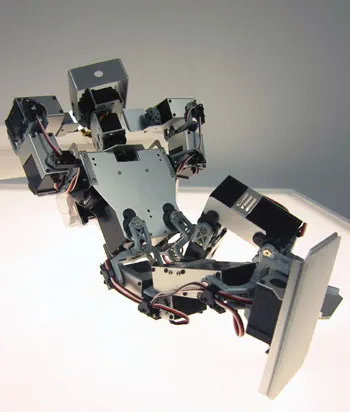
Sleep Waking is an unusual art work that combines recorded brainwave activity and REM sleep with robot behaviors. The Sleep Waking robot plays back your dreams, or, if you will, presents an interpretive dance of your dreams. The Sleep Waking robot is the result of a collaboration between Fernando Orellana and Brendan Burns. Orellana spent a night in The Albany Regional Sleep Disorder Center in New York. The staff wired him up and collected data of every conceivable kind: EEG, EKG, rapid eye movement - you name it. Orellana describes the use of the data to animate the robot in this way: "The eye position data we simply apply to the position the robot's heads is looking. So if my eye was looking left, the robot looks left. The use of the EEG data is a bit more complex. Running it through a machine learning algorithm, we identified several patterns from a sample of the data set (both REM and non-REM events). We then associated preprogrammed robot behaviors to these patterns. Using the patterns like filters, we process the entire data set, letting the robot act out each behavior as each pattern surfaces in the signal. Periods of high activity (REM) where associated with dynamic behaviors (flying, scared, etc.) and low activity with more subtle ones (gesturing, looking around, etc.). The "behaviors" the robot demonstrates are some of the actions I might do (along with everyone else) in a dream." Orellana and Burns used a Kondo KHR-2HV humaniod robot for their project. Orellana believes that the Sleep Waking robot is a metaphor in which the robot is allowed to augment or act out human experience. The robot becomes an extension of the person and (I would add) an extension of the deeper unconscious level of the person (see video ). In the classic 1956 film Forbidden Planet, Dr. Morbius unconsciously uses Krell machinery when sleeping; the unthinkably powerful Krell technologies act upon his unconscious cues, and destroy his enemies. You might want to have some constraints built into the robot that is going to act out your dreams. Sleep is important; you might want to try the Metronap Sleep Pod or even Orexin, the sleep surrogate . From Robot 'plays back' dreams . (This Science Fiction in the News story used with permission of Technovelgy.com - where science meets fiction )
- Video: See Sleep Waking in Action
- Wild Technologies: The Next Step With Richard Hart
- Real Robots: Vote for Your Favorite
Get the world’s most fascinating discoveries delivered straight to your inbox.