













Warmer Antarctic Might Lure Sharks Back

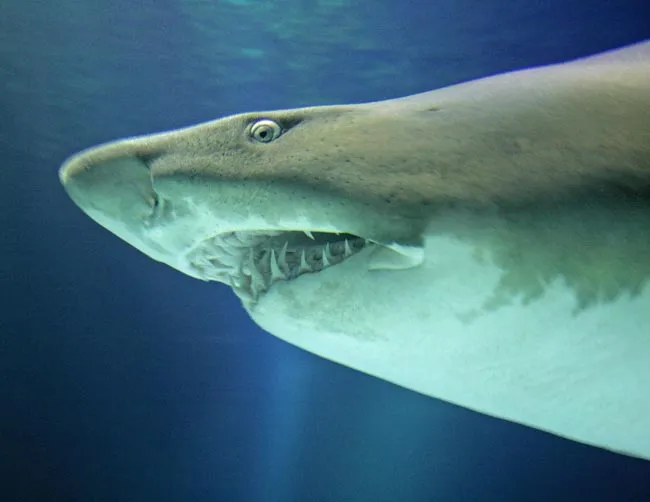
It’s been 40 million years since Antarctic waters were warm enough for sharks to lurk around and feed on polar prey, but rising ocean temperatures from global warming could eventually bring the toothy predators back, a new study suggests. Biologists at the University of Rhode Island analyzed the physiological adaptations and metabolism of sharks and other warm-water predators. Their findings indicate that a warming of just a few degrees in Antarctic waters could make the region hospitable to these species again, with potentially serious consequences to the ecosystems already dwelling there. The findings were presented today at the annual meeting of the American Association for the Advancement of Science in Boston. High metabolisms Ocean-going sharks have a high metabolism rate, the researchers say, because they must constantly swim in order to aerate their gills. All that swimming takes a lot of energy. Maintaining that energy is easier in warmer waters. So while the Antarctic waters have remained chilly, sharks have been kept out of the neighborhood. One group of sharks, though, is a little more primed than most to survive the cold . Benthic sharks — those that live on the seafloor and swim very little — have lower metabolism rates and can survive in waters that are just 45 to 50 degrees Fahrenheit (7 to 10 degrees Celsius). But most benthic sharks are currently found in shallow temperate to tropical waters and can't swim long distances, so it is unlikely they could easily make the southbound trip on their own. But with global warming heating things up, a southward dispersal of sharks isn't out of the question, the researchers say. The waters around the Antarctic Peninsula have increased by about 1.8 to 3.6 degrees Fahrenheit (1 to 2 degrees Celsius) in the last 50 years, which is double to triple the global average increase. "The water only needs to remain above freezing year round for it to become habitable to some sharks, and at the rate we’re going, that could happen this century,” said study team member Cheryl Wilga. “Once they get there, it will completely change the ecology of the Antarctic benthic community." Population declines Wilga and her co-author Brad Seibel don't believe that the arrival of sharks in Antarctic waters would lead to widespread species extinction, but they could lead to dramatic changes in population numbers and the proportions of species found there. "There are few prey-crushing predators in Antarctic waters," Wilga said. "As a result, the Antarctic seafloor has been dominated by relatively soft-bodied, slow-moving invertebrates, just as in ancient oceans prior to the evolution of shell-crushing predators," leaving the native Antarctic species defenseless against bone-crushing sharks and fish. Shrimp, ribbon worms and brittle stars would likely be the most vulnerable species, the researchers report.
- Trivia: The Dirty Jobs of Sharks
- Sharks Everywhere: Vote for Your Favorite
- Images: Great White Sharks
Get the world’s most fascinating discoveries delivered straight to your inbox.

Andrea Thompson is an associate editor at Scientific American, where she covers sustainability, energy and the environment. Prior to that, she was a senior writer covering climate science at Climate Central and a reporter and editor at Live Science, where she primarily covered Earth science and the environment. She holds a graduate degree in science health and environmental reporting from New York University, as well as a bachelor of science and and masters of science in atmospheric chemistry from the Georgia Institute of Technology.