













Images: Pirate Tale Revealed in Vatican Archives

Treasure from Cartagena

Newly published documents from the Vatican archives tell an incredible story of a ship full of treasure, bound for the pope, which was seized by pirates near Cartagena in modern day Spain.
Ballist discovered

Records indicate that one of the pirate ships had at least seven ballistae which would have fired stone bullets about nine inches in size. Ballista functioned as artillery well into the middle ages until it was replaced by cannon. This drawing shows a reconstruction of how one type of stone throwing ballista worked.
Pirate galley
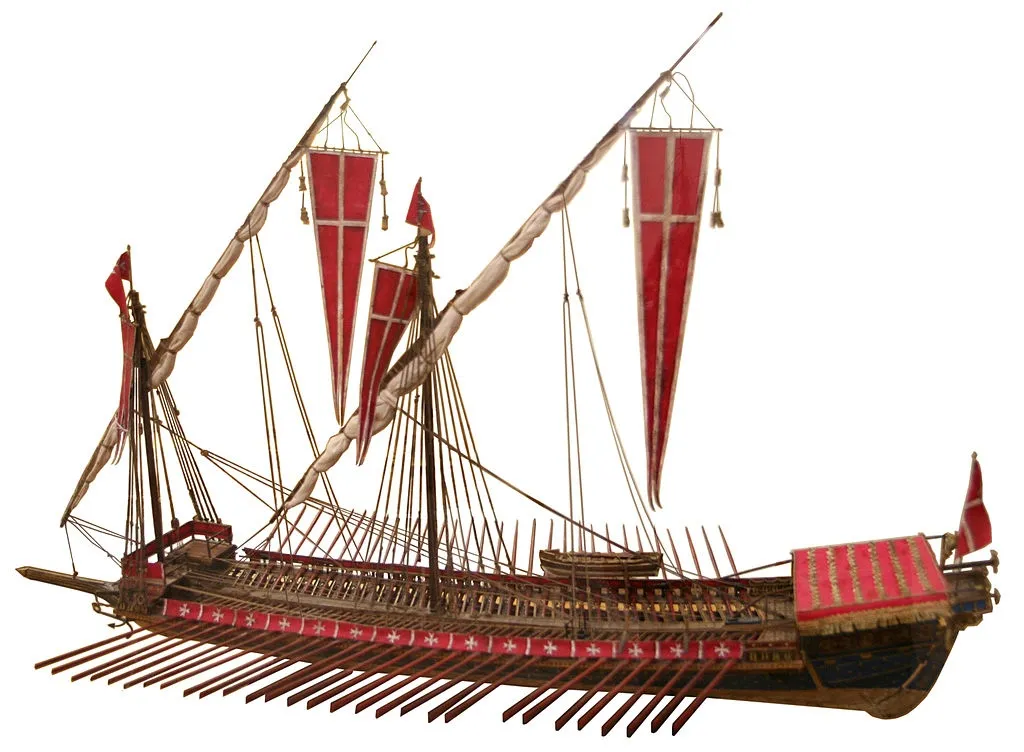
A model of a Galley of the Order of the Knights of St. John (Knights hospitaller), Malta. Galleys were used in the Mediterranean from ancient times until the modern era. Researchers believe that the type of galley the pirates used was a galea sotile, between 105 and 120 feet long. The ship model can be found at the Museo Storico Navale di Venezia (Naval History Museum) in Venice, Italy.
Philip IV Coin

The treasure stolen by the pirates contained numerous gold coins. Some of them were similar to this coin issued by Philip IV of France around the year 1300.
Avignon delivery

The São Vicente, a ship laden with a dead bishop's treasure, was to deliver the treasure consisting of gold, silver, rings, tapestries, jewels, fine plates and even portable altars to Avignon, in France, (shown here), where Pope Innocent VI (reign 1352-1362) was based.
Get the world’s most fascinating discoveries delivered straight to your inbox.

Owen Jarus is a regular contributor to Live Science who writes about archaeology and humans' past. He has also written for The Independent (UK), The Canadian Press (CP) and The Associated Press (AP), among others. Owen has a bachelor of arts degree from the University of Toronto and a journalism degree from Ryerson University.