On July 21, 1969 — 45 years ago — Neil Armstrong and Buzz Aldrin became the first humans to walk on the face of the moon.
The televised views of lunar desolation are the most famous images from this mission, Apollo 11. But Armstrong, Aldrin and their third crewmember, Michael Collins, got some gorgeous views of Earth, too.
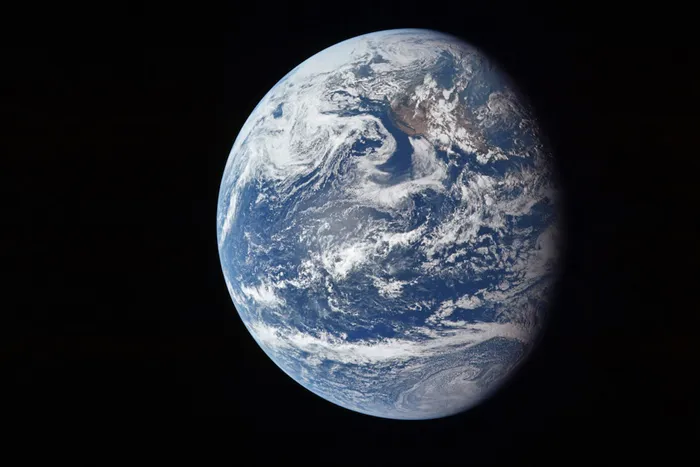
This "blue marble" image of Earth against the blackness of space was taken July 16, 1969, the same day Apollo 11 launched from Cape Canaveral, Florida, according to NASA's Earth Observatory. Most of what is visible here is the Pacific Ocean, though portions of California, the Pacific coast and Alaska peak through swirling clouds. A Hasselblad 500 EL camera captured this shot.
Latest Videos FromLive Science
The trip from Earth to the moon took three days. The crew launched at 9:32 a.m. local time from Florida, after a breakfast of steak, eggs, coffee and orange juice. Within 12 minutes from launch, they were in Earth orbit. From there, they fired their third-stage Saturn V engine (the first two phases had already been jettisoned) and set a course for the Sea of Tranquility on the moon's surface.
The first day was calm and orderly, and gave the crew time to "ooh" and "ahh" over Earth's scenery. In the flight transcripts, Aldrin tells Mission Control that he can see snow on the mountains in California and a clear, smog-free view of Los Angeles. When asked how Baja, California, looks, Aldrin says, "Well, it's got some clouds up and down it, and there's a pretty good circulation system a couple of hundred miles off the west coast of California … OK, Houston. You suppose you could turn the Earth a little bit so we could get a little bit more than just water?"
People on Earth would get a taste of what the astronauts saw the next day, July 17, 1969, when the crew participated in a color television broadcast from 147,300 miles (237,000 kilometers) away.
Editor's Note: If you have an amazing nature or general science photo you'd like to share for a possible story or image gallery, please contact managing editor Jeanna Bryner at [email protected].
Follow Stephanie Pappas on Twitter and Google+. Follow us @livescience, Facebook & Google+. Original article on Live Science.