














31-Day Underwater Mission Splashes Down This Summer

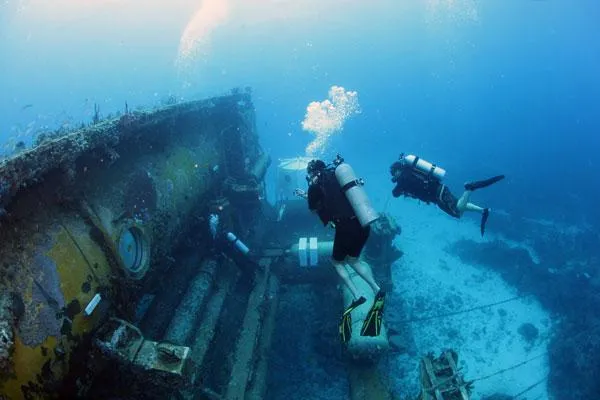
A monthlong underwater research mission led by the grandson of famed oceanographer Jacques Cousteau will begin on June 1. The so-called aquanauts will spend 31 days living and working in an underwater laboratory off the coast of Florida.
Documentary filmmaker Fabien Cousteau will be joined by a team of scientists on the monthlong expedition, named Mission 31. The researchers will live aboard Aquarius Reef Base, a seafloor habitat located roughly 63 feet (19 meters) underwater in the Florida Keys.
Cousteau and his team will test new technologies and conduct research on the effects of climate change on corals, sponges and other sea life. Scientists with the privately funded excursion will also examine the physiological and psychological impacts of long-term saturation diving and the effects of living in prolonged confinement, Cousteau has said. [Photos: The World's Most Extreme Laboratories]
The aquanauts will spend roughly six to nine hours each day diving and performing experiments, according to Mission 31 planners. Live footage will be broadcast to the public throughout the expedition, and film crews will be compiling materials for a future Mission 31 documentary.
"The overarching theme for Mission 31 is the human-ocean connection within the lens of exploration and discovery," Cousteau said in a statement. "Mission 31 pays homage to my grandfather's work and all aquanauts who have since followed his lead in the name of ocean exploration."
The expedition will also honor the 50th anniversary of Jacques Cousteau's famous stay aboard the Continental Ice Shelf Station Two (Conshelf Two) in 1963. During that historic underwater mission, the oceanographer lived in a habitat located 30 feet (9 m) beneath the Red Sea, off the coast of Sudan, for 30 days.
If successful, Mission 31 will surpass the 1963 Conshelf Two mission by one full day. The impending expedition will also be the longest that researchers have lived aboard the Aquarius laboratory, Mission 31 planners said.
Get the world’s most fascinating discoveries delivered straight to your inbox.
Aquarius Reef Base is the only underwater marine habitat in the world. The unique facility is owned by the National Oceanic and Atmospheric Administration, and is managed by Florida International University.
Mission 31 was originally scheduled to splash down in November, but the trip was delayed after some of the required science and film permits were held up due to the shutdown of the federal government last October.
Follow Denise Chow on Twitter @denisechow. Follow us @OAPlanet, Facebook and Google+. Original article at Live Science's Our Amazing Planet.

Denise Chow was the assistant managing editor at Live Science before moving to NBC News as a science reporter, where she focuses on general science and climate change. Before joining the Live Science team in 2013, she spent two years as a staff writer for Space.com, writing about rocket launches and covering NASA's final three space shuttle missions. A Canadian transplant, Denise has a bachelor's degree from the University of Toronto, and a master's degree in journalism from New York University.