













Does Meditation Have Health Benefits?
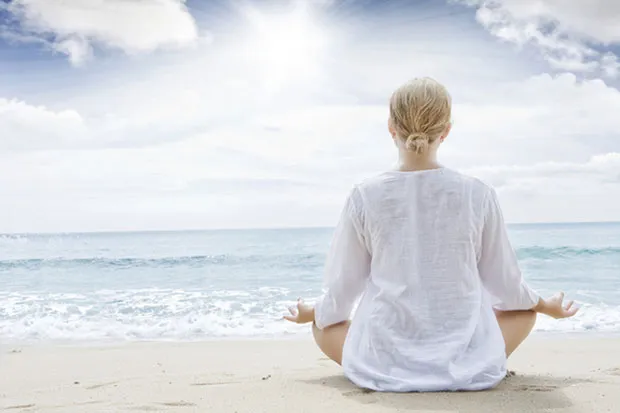
"The Healthy Geezer" answers questions about health and aging in his weekly column.
Question: Does meditating have any real health benefits?
Answer: Meditation definitely reduces stress. And too much stress is bad for your health.
There is some research that indicates meditation may help with: Allergies, anxiety, asthma, binge eating, cancer, depression, fatigue, heart disease, high blood pressure, pain, sleep difficulties and substance abuse.
I started meditating in 1976, when Dr. Herbert Benson published his book, "The Relaxation Response."
The techniques he advocated work. In the years since, I've found that, when I forget to meditate, I get a stress buildup. As soon as I meditate, I feel better. And the effects of the meditation carry through the day.
I studied Zen Buddhist meditation, which involves many of the same techniques that Dr. Benson wrote about. Zen meditation is more structured and its purpose is to bring spiritual enlightenment, not just relaxation.
Get the world’s most fascinating discoveries delivered straight to your inbox.
Is there a difference between meditation and prayer? Many sources define prayer as a form of meditation. There are similarities between the two. I would explain it this way: It's possible for an atheist to meditate.
Meditation is classified as a mind-body practice in complementary and alternative medicine (CAM). Meditation has been practiced for thousands of years. There are many types of meditation. Most of them originated in ancient spiritual traditions.
How does it work?
If you pay close attention to your mind, you'll find that it has a mind of its own. All day long, the mind brings up thoughts you didn't ask for. Much of your thinking is as voluntary as breathing or circulation. Unfortunately, a lot of the stuff your mind regurgitates is negative.
"I'm such a failure...When am I gonna catch a break?...Everyone is against me...What's the point of anything?" Etcetera, etcetera, etcetera…
Where do these thoughts come from? Years of experiences and the collective consciousness of humankind. They're all stored away just waiting to show their ugly faces. They usually surface when your body/mind is under a lot of stress. When you meditate, you clear away this stress-intensifying garbage.
The primary benefits of meditation are immediate relaxation and a better understanding of how your body, mind and spirit work together so that you can handle stressful situations. Over time, you will gain greater peace for yourself and those around you.
I have learned a lot from studying Zen and Eckhart Tolle, a German philosopher who advocates many of the teachings of Zen. In Tolle's book, The Power of Now, he explains that meditation can help you stay in the moment, which is a potent stress-reliever.
"The eternal present is the space within which your whole life unfolds, the one factor that remains constant. Life is now. There was never a time when your life was not now, nor will there ever be," Tolle writes.
Past and future are mental constructs. If you dwell upon the past, you can fall into the abyss of guilt, regret, resentment and many other negative feelings. If you concentrate on the future, you can build up overwhelming obstacles that will make you fearful.
Tolle points out that we are all capable of dealing with the present moment, but that no one can rectify imagined mistakes of the past or the projected challenges of a future. Neither the past nor the future exists. Accepting this reality gives you an amazing high.
[More about meditation in our next column.]
If you would like to ask a question, write to [email protected].
All Rights Reserved © 2014 by Fred Cicetti