













January is Warmest on Record

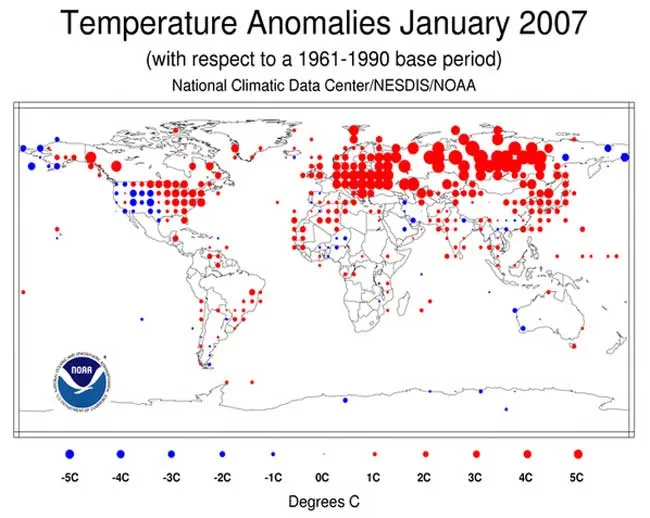
The average global temperature last month was the highest for any January on record, according to NOAA, climbing to 55.13 degrees Fahrenheit, which is 1.53 degrees warmer than the 20th-century average.
The global reading, an average of measurements taken over land and sea, beat out the previous record for a January, set in 2002 at 54.88 degrees.
Land temperatures especially peaked at a record-high 3.40 degrees warmer than average.
- Global Map of January Temperature Departures
The warm January was at least partly the result of an El Niño weather pattern that began last September and continued into January, combined with the continuing global warming trend, NOAA reported today.
The most unusually warm temperatures were measured in the Northern Hemisphere, far from the equator. Large parts of Eastern Europe and Russia experienced temperatures more than 8 degrees above average, and temperatures more than 5 degrees above average occurred in much of Canada. The snow cover in January in Europe and Asia was the second lowest on record.
The warming was less pronounced in the 48 contiguous United States, where the average January temperature was just under 1 degree above the 20th century average.
Scientists say no single weather event or warm month can be blamed on global warming, but that more extreme conditions are likely as the planet's climate changes and strings of warm months are indeed evidence of climate change.
Get the world’s most fascinating discoveries delivered straight to your inbox.
- Video: Goldilocks and the Greenhouse
An upper-level wind pattern brought warmer-than-average temperatures to the East and colder-than-average temperatures to the southern Plains states and much of the West. Hundreds of daily low temperature records were broken during a mid-January cold snap in Arizona and southern California.
Snowfall was below average in most of the Rockies, meaning that water supplies could plummet later this year. Drought is already occurring in 25 percent of the contiguous United States, according to the U.S. Drought Monitor, at the end of January. Droughts are worst now in southern Texas, Wyoming, the western High Plains and northern Minnesota.
Last year was a record warm year in the United States. The past nine years are all among the 25 warmest on record for the contiguous United States, a streak unprecedented in records dating back to 1896. Scientists say 2007 could be the warmest yet globally.
- Surprising Results of Global Warming
- Earth Will Survive Global Warming, But Will We?
- Weather 101: All About Weather
- All About Climate Change
