













Black Carbon Soot Greater in China, India Than Thought

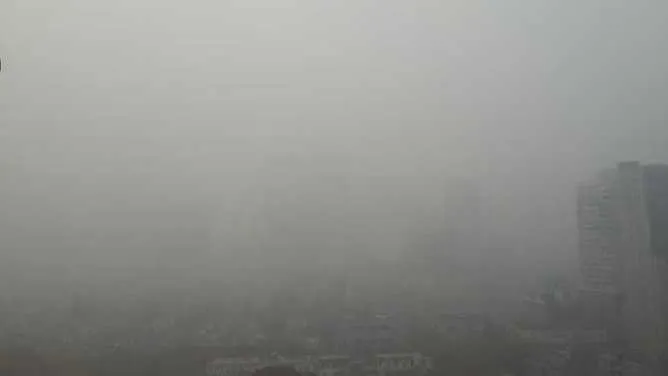
New global estimates of black carbon emissions — a major component of soot — suggest that certain regions of China and India experience two to three times greater levels of this pollutant than previous models have suggested, a new study reports.
Black carbon is an aerosol (or small particle suspended in the air) produced when fossil fuels, biofuels or agricultural waste do not burn completely during combustion due to an insufficient oxygen supply. The dark-colored pollutant has been found to increase atmospheric temperatures by absorbing heat from the sun both while floating in the air column and once settled on surfaces on the ground. The pollutant is harmful to human health when inhaled, and has been linked to cardiovascular and respiratory problems, according to the U.S. Environmental Protection Agency. [In Photos: World's 10 Most Polluted Places]
Existing estimates of global human exposure to black carbon have been relatively poorly defined, often taking whole countries into account as single entities, rather than recognizing how different regions of countries may differ in exposure levels. Previous estimates have also failed to accurately consider differences in the amount of black carbon that different types of fuels emit.
Researchers based at Peking University in Beijing recognized these shortcomings in previous black carbon emissions estimates, and improved upon these past estimates using new global fuel consumption data and new information regarding how much black carbon different fuels produce.
The team found that previous models had largely underestimated the exposure levels of residents within regions of northern and southwestern China, as well as northeastern India, they report today (Jan. 27) in the journal Proceedings of the National Academy of Sciences.
"The main reason for such differences comes from the fact that the [new] inventory takes into account subnational fuel consumption data," the team writes. "[The previous inventory] is based on national fuel data, and thus implicitly assumes per capita fuel consumption is uniformly spread over each country."
The team notes that the urban population of China and India is projected to increase from 42 and 29 percent of the population in 2007, respectively, up to 62 percent and 40 percent in 2030, and that this shift to cities could increase black carbon exposure in those countries by about 14 percent. Their new high-resolution model will help future studies assess the health impacts of this harmful pollutant, they write.
Get the world’s most fascinating discoveries delivered straight to your inbox.
Follow Laura Poppick on Twitter. Follow us @livescience, Facebook & Google+. Original article on LiveScience.
