Kim Tingley is a regular contributor to OnEarth magazine, published by the Natural Resources Defense Council, and the New York Times Magazine. This article was originally published by OnEarth magazine. Tingley contributed this article to LiveScience's Expert Voices: Op-Ed & Insights.
Classical geometry is smooth and regular: straight lines, right angles, perfect circles. Man-made objects, from skyscrapers to iPhones, conform to its rules, but almost nothing in nature does. Nature is messy, craggy and chaotic — or so it seemed until 1975, the year a maverick mathematician, Benoît Mandelbrot, invented the term fractalsto describe patterns he had discerned within seemingly irregular shapes found in nature.
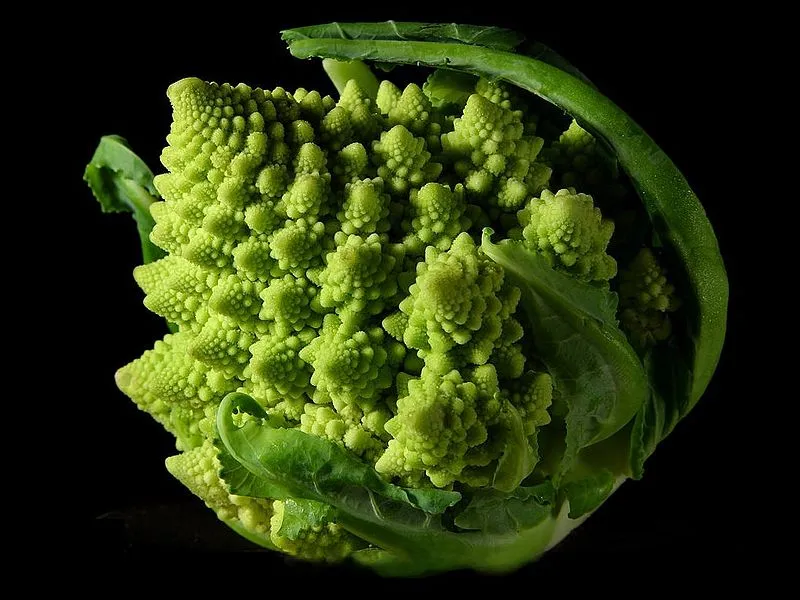
Mandelbrot showed that natural phenomena like clouds, mountains, broccoli, human lungs, and (yes) even galaxies are, despite their random appearance, highly organized, their larger forms composed of miniature replicas of those same forms. And those replicas themselves contain even smaller replicas. At the most fundamental level, he showed that each foot of coastline has the same basic jagged texture and shape as a mile of it does, or as 100 miles do.
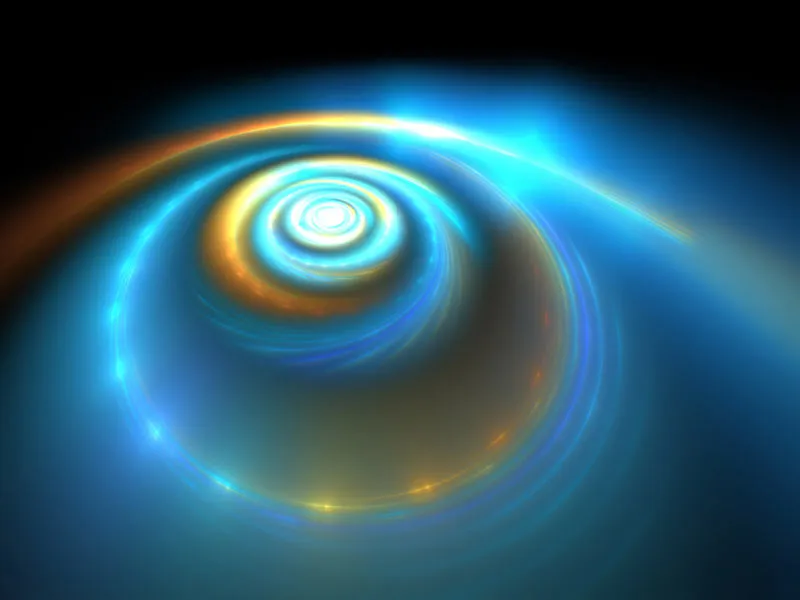
Erik Andrulis of Case Western suggest everything around us oscillates between excited and ground states as objects pivot around the center of these lifelike gyres, or spinning spirals.
Mandelbrot's revelation presented a new way of perceiving nature, not as something disordered and chance-governed but as something intricately engineered. The resultant field of fractal geometry provides people with a way of defining and measuring these mysterious forms and — when it's applied to the field of biomimicry — re-creating them. And humanity's newfound ability to copy nature's fundamental structures raises an obvious question: Why don't designers do so more often?
This question is at the heart of biomimicry, which seeks to appropriate nature's most successful designs in order to create more efficient and sustainable cities, buildings, and consumer products. "After 3.8 billion years of research and development, failures are fossils, and what surrounds us is the secret to survival," wrote the biologist Janine Benyus in her seminal 1997 book, Biomimicry. Benyus thinks fractals can help us solve a diverse array of design challenges.
For one thing, "fractals really increase surface area," she said. Picture a simple hexagon. Then picture a hexagonal snowflake crystal, within its form a baroque system of ridges that greatly complicates the basic shape without causing it to expand beyond its original boundaries. Cell phone makers, playing off this idea, have already figured out new ways of maximizing signal reception by bending antennas into fractal shapes, adding length without increasing the amount of space the antennas take up.
Sign up for the Live Science daily newsletter now
Get the world’s most fascinating discoveries delivered straight to your inbox.
Structural properties are not just chemistry, they're architecture
Acousticians and concert-hall architects already know that when sound hits a smooth, flat wall, it bounces off and echoes. A wall with a rough surface, on the other hand — one that mimics the fractally textured surface of, say, a bark-covered tree — does a much better job of absorbing sound. Trees are like fractal idea factories: Benyus sees in them a template for highly efficient water distribution, for example.
If you're a topical expert — researcher, business leader, author or innovator — and would like to contribute an op-ed piece, email us here.
"Start with one diameter" (i.e., the trunk), she said. "Branch it, drop down to a smaller diameter, then branch it again." This pattern, which repeatedly finds expression in a tree's branches, its stems, and the delicate veins of its individual leaves, allows water to flow freely over a maximum amount of surface area. "Nothing in our plumbing systems looks anything like that," she said, noting that our pipes "are always taking 90-degree angles. That's why we have big pumps that require lots of energy."
It turns out that strategically embedding fractal shapes into almost anything helps make that thing stronger. Physicists have made concrete more durable and impermeable by using fractals to engineer its ingredients. And researchers at Harvard University's Wyss Institute for Biologically Inspired Engineering recently created a biodegradable alternative to plastic known as shrilk, which owes some of its exceptional strength to the inspiration for its engineering: the fractal layers of an insect's cuticle. "[Many of] the structural properties found in nature are not just chemistry," Donald Ingber, the institute's director, told the Harvard Gazette. "They're architecture."
Finding inspiration in nature isn't new, of course. But actively querying nature about its best practices is. The trickiest part of biomimicry is in knowing not only what to copy, but also when and where. If we really hope to collaborate with nature on new building and design projects, we'll need to rethink our role within it. We'll have to make sure we're balancing our needs with the needs of our larger ecosystem, which — while it may look messy — is actually made up of countless interconnected systems that, fractal-like, mirror the whole.
Fractals invite us to admire nature for its beauty and functionality — to get outside, hunt for these mysteriously repeating forms, and then try to figure out what their purpose might be.
"The nature of fractals is meant to be gradually discovered by the reader," Mandelbrot wrote, "not revealed in a flash by the author." It takes practice, patience and immersion to start seeing them. But once you do, they're everywhere.
This article first appeared as "Design for Living" in OnEarth magazine. The views expressed are those of the author and do not necessarily reflect the views of the publisher. This version of the article was originally published on LiveScience.