













Deadly Fish Virus Spreads in Northeast

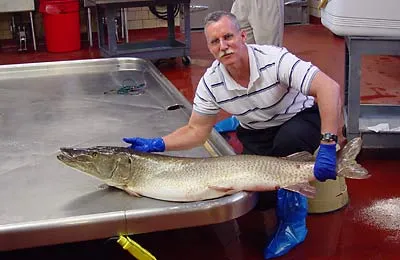
A deadly virus found in two fish species in the northeastern United States last month appears to have spread to two more species, scientists said today.
Meanwhile, hundreds of fish in Lake Ontario and the St. Lawrence River have died in recent weeks, but officials are not yet sure if the newfound virus is behind the kills.
Last week, an estimated 1,000 dead fish washed up on the shores of Lake Ontario in just one morning.
Over the past month, about 300 dead fish have been frozen and sent to scientists at Cornell University for evaluation. The virus, hemorrhagic septicemia, was confirmed in these two fish in June: round gobies and muskellunge. It causes fatal anemia and hemorrhaging in many fish species but poses no threat to humans or other animals, the scientists say.
Researchers are awaiting test results for the possible presence of the virus in smallmouth bass and burbot. Preliminary indications are that it has spread.
"We have detected the virus in other fish species in the region, which may be contributing to the continuing fish mortalities," said Geoffrey Groocock, a postdoctoral associate at Cornell's Aquatic Animal Health Program.
The fish deaths may not be as bad as they seem, however.
Get the world’s most fascinating discoveries delivered straight to your inbox.
More dead fish might be being reported simply because people are vacationing at the lakes during summer. Overall fish mortality rates "do not appear to be changing," Groocock and colleagues said in a statement.
So what to do?
"There is no cure for [this virus] in fish in an ecosystem as large as the Great Lakes Basin. Given this, it is likely that management practices designed to limit the spread of the virus will be put in place," Groocock said.
- Top 10 Mysterious Diseases
- Gallery: The World's Biggest Beasts
- Invasive Creature Spreads to All Great Lakes
- Oops! Scientists Nudge Fish Closer to Extinction
- Mysterious Fish 'Party' Near NC Shore
- Save This Ugly Fish
- Erie Dead Zone

Robert is an independent health and science journalist and writer based in Phoenix, Arizona. He is a former editor-in-chief of Live Science with over 20 years of experience as a reporter and editor. He has worked on websites such as Space.com and Tom's Guide, and is a contributor on Medium, covering how we age and how to optimize the mind and body through time. He has a journalism degree from Humboldt State University in California.