













Chimps Catch Yawns From Humans, Study Shows

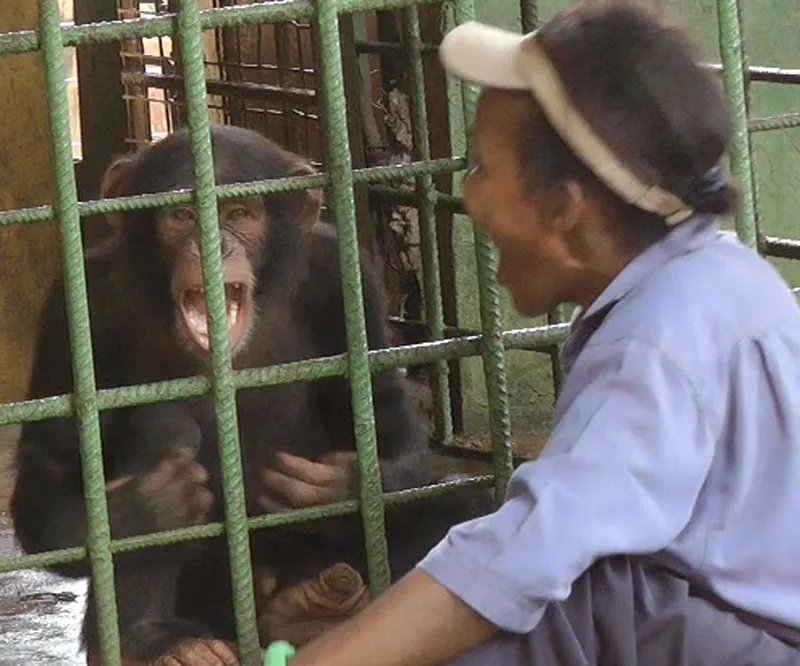
Chimpanzees catch yawns from humans just like humans catch yawns from humans, new research shows.
Chimpanzees are amongst several primate species — including baboons and macaques — that have been shown to catch yawns from individuals within their own species. Researchers think this uncontrollable reaction helps communicate a sense of empathy that strengthens group bonds in both humans and primates.
To determine whether this phenomenon — known as contagious yawning — crosses species lines in chimpanzees, researchers at Lund University in Sweden studied 33 orphaned chimps between the ages of 13 months and 8 years, and observed each individual's reaction to yawns from two different humans: one who they knew well (their surrogate mother), and one who they did not know at all (a researcher). [8 Humanlike Behaviors of Primates]
The researchers designed the study in this way, because previous studies have shown that chimps catch more yawns from chimps they know well than from others in different social groups.
To their surprise, the team found that study chimps responded similarly to both humans, suggesting the primates do not discriminate amongst familiar and unfamiliar humans in the way they do with other chimps.
The team also found that chimps do not become susceptible to the contagion until later in life, after about age 5, suggesting innate empathy progresses and becomes more complex with age.
The same is the case in humans — children do not generally start catching yawns until about age 4, the researchers said.
Get the world’s most fascinating discoveries delivered straight to your inbox.
This is the first time that scientists have proven that chimps catch yawns from humans, though past research has found that dogs catch yawns from their owners.
The team now plans to investigate why chimps treat unfamiliar humans different than unfamiliar chimps, study co-author Elainie Madsen said in a statement.
"A reason for this may be that chimpanzees may apply 'targeted empathy' to interactions with members of their own species — and selectively catch yawns from familiar chimpanzees — while they apply a more generalized form of empathy to interactions with humans," Madsen said in the statement.
In general, chimps develop more cooperative relationships with humans than with unfamiliar chimps, with whom they tend to be more competitive and hostile, the team said.
The findings were detailed online Oct. 16 in the journal PLOS ONE.
Follow Laura Poppick on Twitter. Follow LiveScience on Twitter, Facebook and Google+. Original article on LiveScience.
