













Cocktail-Drink Boat Powered by Booze
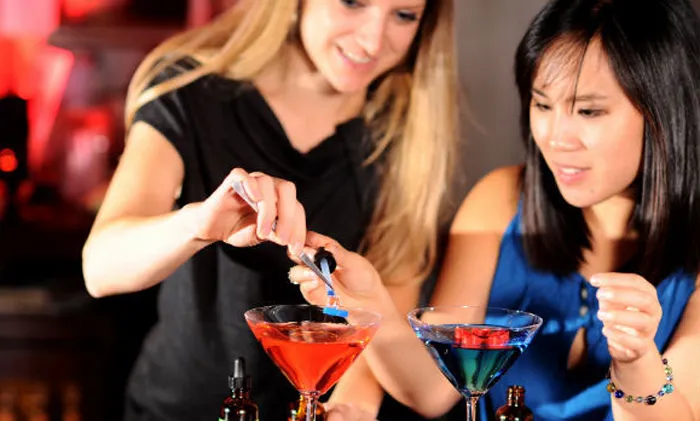
Imagine sitting down with a cocktail only to find a tiny, brightly colored boat zipping around the surface. Either you really need to be cut off or you’re looking at a booze-powered cocktail boat invented by foodie scientists. And, like other fruity garnishes, this one is meant to be eaten.
The boat idea first emerged when Lisa Burton was pursuing a PhD in mechanical engineering at MIT and took a class taught by her adviser, fluid dynamicist John Bush. During the class Burton learned about water-walking insects, which inspired her to construct a tiny fluid-propelled vessel with help from her friend, fellow mechanical engineer and designer Nadia Cheng.
PHOTOS: Hacking Bacteria to Do Our Bidding
The fluid-powered boat is designed to have a hollow cavity in the middle with a slit in the back that allows the fluid you pour in to escape. When the boat sits on water with an evaporative liquid streaming steadily out of the back, the water acts like a rope that tugs the device forward. This is because there’s greater surface tension with the water than the liquid fuel.
For the fuel, Burton originally tried everything from her kitchen that might work: soy sauce, sugar water, Tabasco, different liquors. She discovered that an evaporative fluid with low surface tension was ideal. Liquors performed far better than anything else, especially strong ones like Bacardi 151, which is 75 percent alcohol.
The trick with the boats was to make them light enough to float on water and durable enough so that they wouldn’t decompose in the water. Burton tried different materials including mixtures of candies, marshmallows and other food. They tasted good but didn’t function as well as those made from just wax or gelatin. ”The boats made of wax worked great, but were as tasty as flavorless wax can be,” she told me.
Edible Gold Sensors Alert to Spoiled Food
Get the world’s most fascinating discoveries delivered straight to your inbox.
Through John Bush, Burton and Cheng connected with science-minded chefs José Andrés, César Vega and the D.C.-based ThinkFoodGroup. In addition to the boats, the team also made an edible flower-inspired pipette that can be used as a clever way to deliver a modest liquid palate cleanser between dishes. This month the group published their results in the journal Bioinspiration & Biomimetics (abstract).
“As soon as you set the alcohol-filled boat in your drink, it takes off and dashes around your glass for up to a minute or two,” said Burton, who is now a data scientist based in Austin. The motion is also fairly erratic due to both the boundaries of the glass and the remaining alcohol on the surface that does not evaporate or mix into the bath.
Burton said they would love to commercialize reusable versions of the devices and are talking with MIT’s Technology Licensing Office about obtaining patents. Meanwhile, she thinks the flowers will likely show up in José Andrés’ restaurants first with the edible boats emerging as soon as he and his team create just the right dish for them. Since I’ve been known to enjoy chewy candies and rum cocktails, plan to make mine a double.
This story was provided by Discovery News.