















Scene of 1,500-Year-Old Massacre Uncovered in Sweden

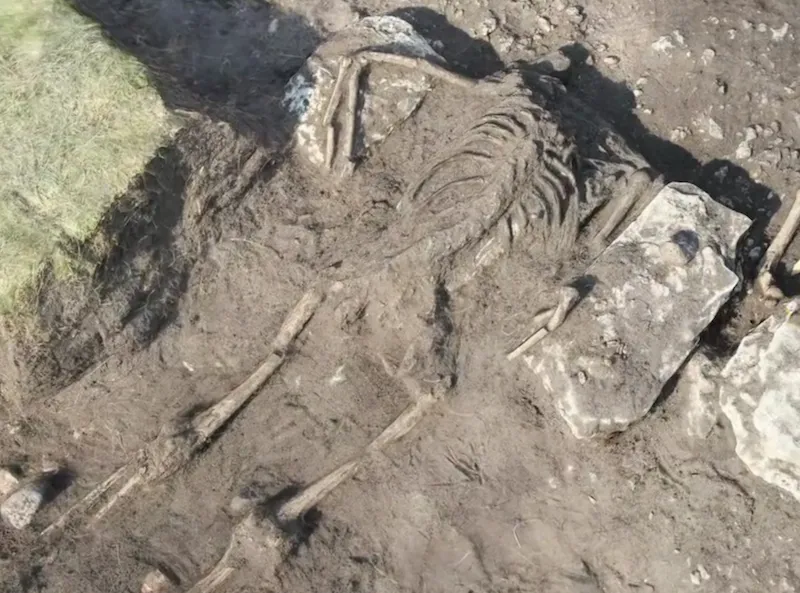
At the site of an ancient island fort in Sweden, archaeologists have uncovered the victims of a sudden massacre, whose bodies were frozen in time for centuries much like the victims of Pompeii.
Researchers think hundreds of people once lived in single-family stone houses within the walled settlement on Öland, a long narrow island off the southeast coast of Sweden in the Baltic Sea. But the fifth-century fort seems to have been left in ruins after an ambush, recent excavations suggest.
"I don't think anyone dared to go near it for a very long time," Helene Wilhelmson, an osteologist at Lund University said in a video released by the school. [8 Grisly Archaeological Discoveries]
"It's more of a frozen moment than you normally see in archaeology," Wilhelmson added. "It's like Pompeii. Something terrible happened and everything just stopped."
In an initial investigation at the site in 2010, researchers found jewelry boxes with finely-crafted gilded broaches and sets of beads, hinting at former occupation. Later, researchers found traces of a house within the fort. In the doorway, they uncovered two feet peeking out, Wilhelmson said.
The archaeologists eventually excavated the full skeleton, which had signs of blunt force trauma to the head and shoulder. So far the researchers say they have found five sets of human remains, all belonging to people who seem to have met a sudden death.
"I think they were surprised," Wilhelmson said, explaining that two of bodies were found lying close to each other by the door as if they were running out to escape when they were killed. The arrangement of the dead bodies is especially unusual for a period when people in the region traditionally burned their dead on a funeral pyre.
Get the world’s most fascinating discoveries delivered straight to your inbox.
The archaeologists are using 3D modeling to reconstruct the 1,500-year-old crime scene. The technique will give them a chance to see, simultaneously, all the bodies where they fell even though archaeologists have removed the skeletons one by one.
"We never have the complete scene exposed at the same moment, but using the 3D models we can actually recreate the complete scene," Lund University archaeologist Nicolo Dell'Unto said in a video.
The researchers think they are likely to find several more skeletons as their work at the site continues, according to the university.
Follow Megan Gannon on Twitter and Google+. Follow us @livescience, Facebook& Google+. Original article on LiveScience.
